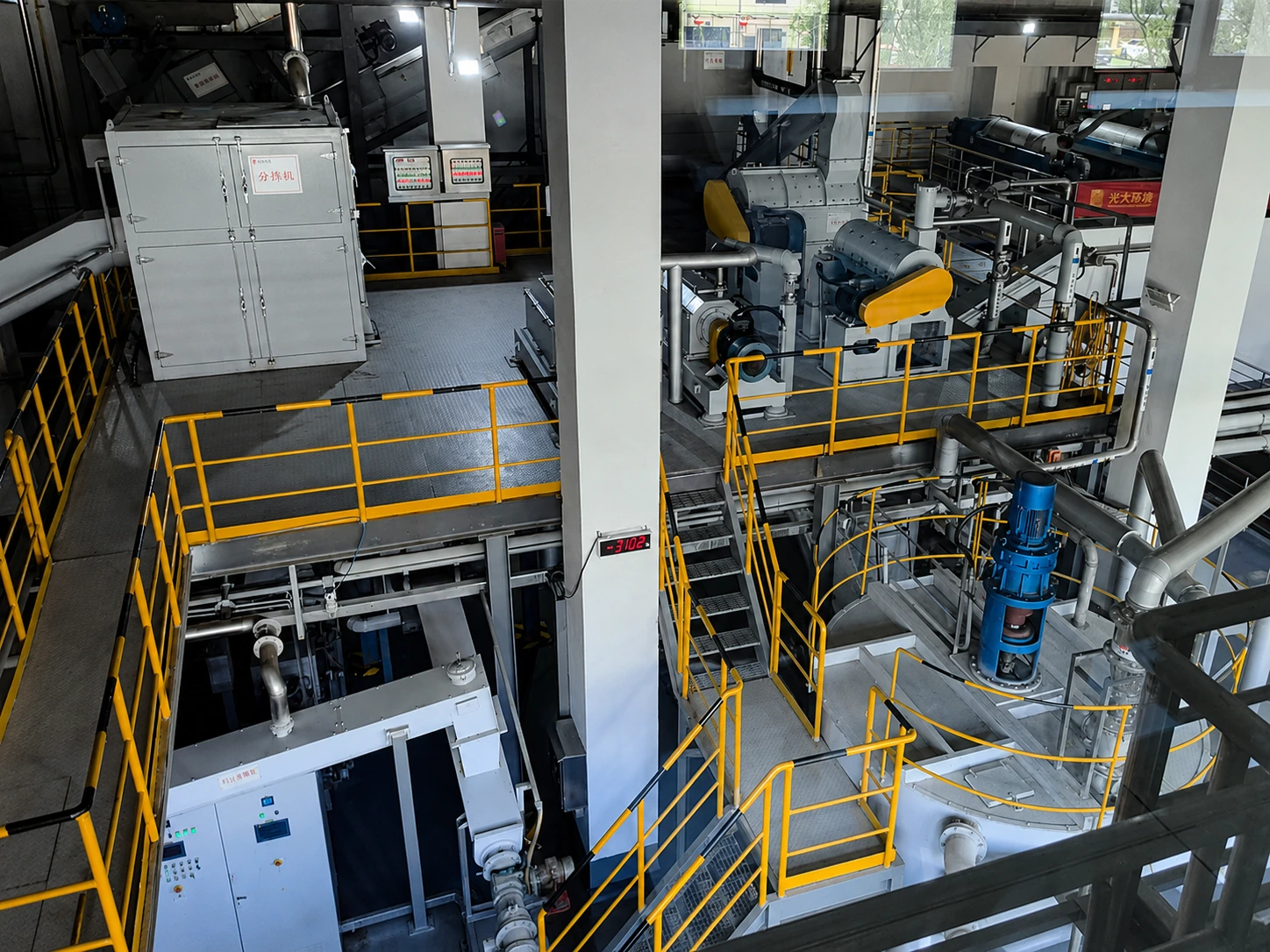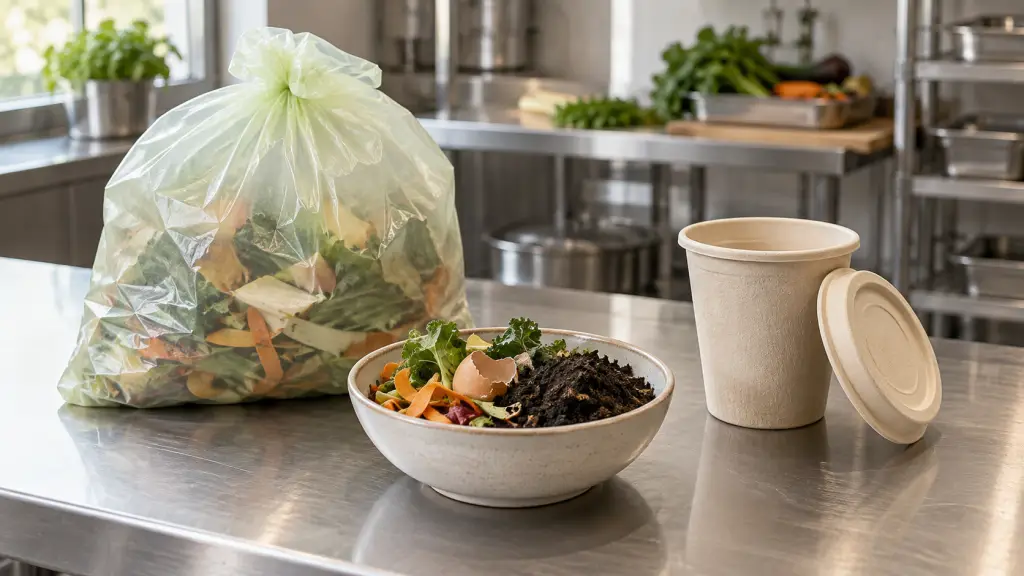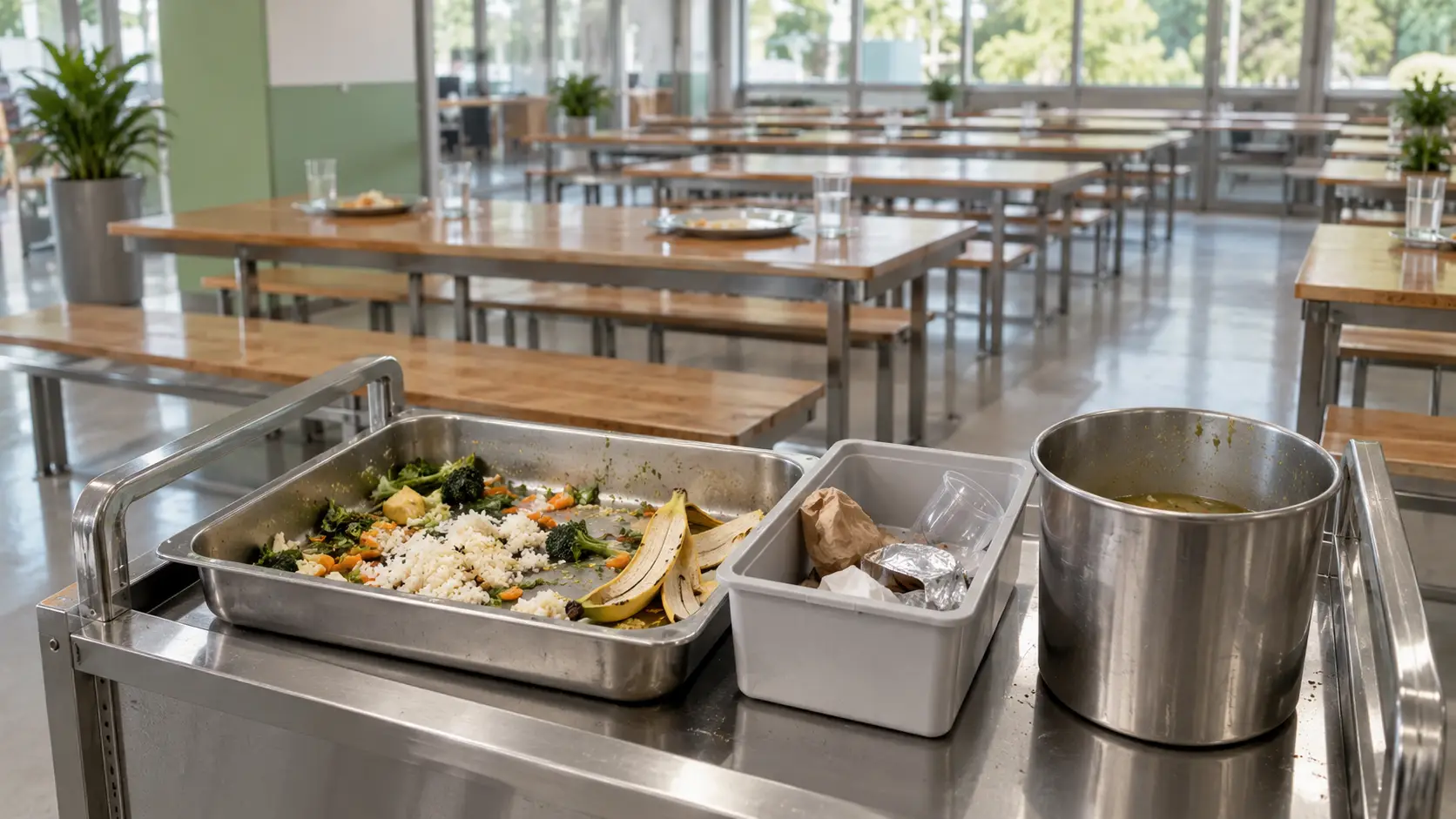
Cover: AI-generated school cafeteria illustration; not a Wawli customer installation.
After the lunch service, a school kitchen may be left with vegetable trimmings, uneaten rice, fruit peel and mixed plate scraps. Handling that material well takes more than adding another bin. Composting in schools needs a clear routine: prevent avoidable waste, separate suitable food scraps, choose a realistic treatment capacity and decide where the processed material will go.
For schools considering a food waste composting machine, the first question is practical: can the equipment fit the amount of waste, the available space and the people responsible for it? This guide explains how to build that decision around your school’s actual operation.
Start with the school food waste you can prevent
Equipment planning should sit alongside efforts to reduce uneaten meals and excess preparation. A machine can process suitable scraps; it cannot explain why a particular lunch is repeatedly left on plates.
Begin with a waste audit. The EPA’s school food waste audit guide provides a useful starting point for understanding cafeteria waste and identifying prevention opportunities.
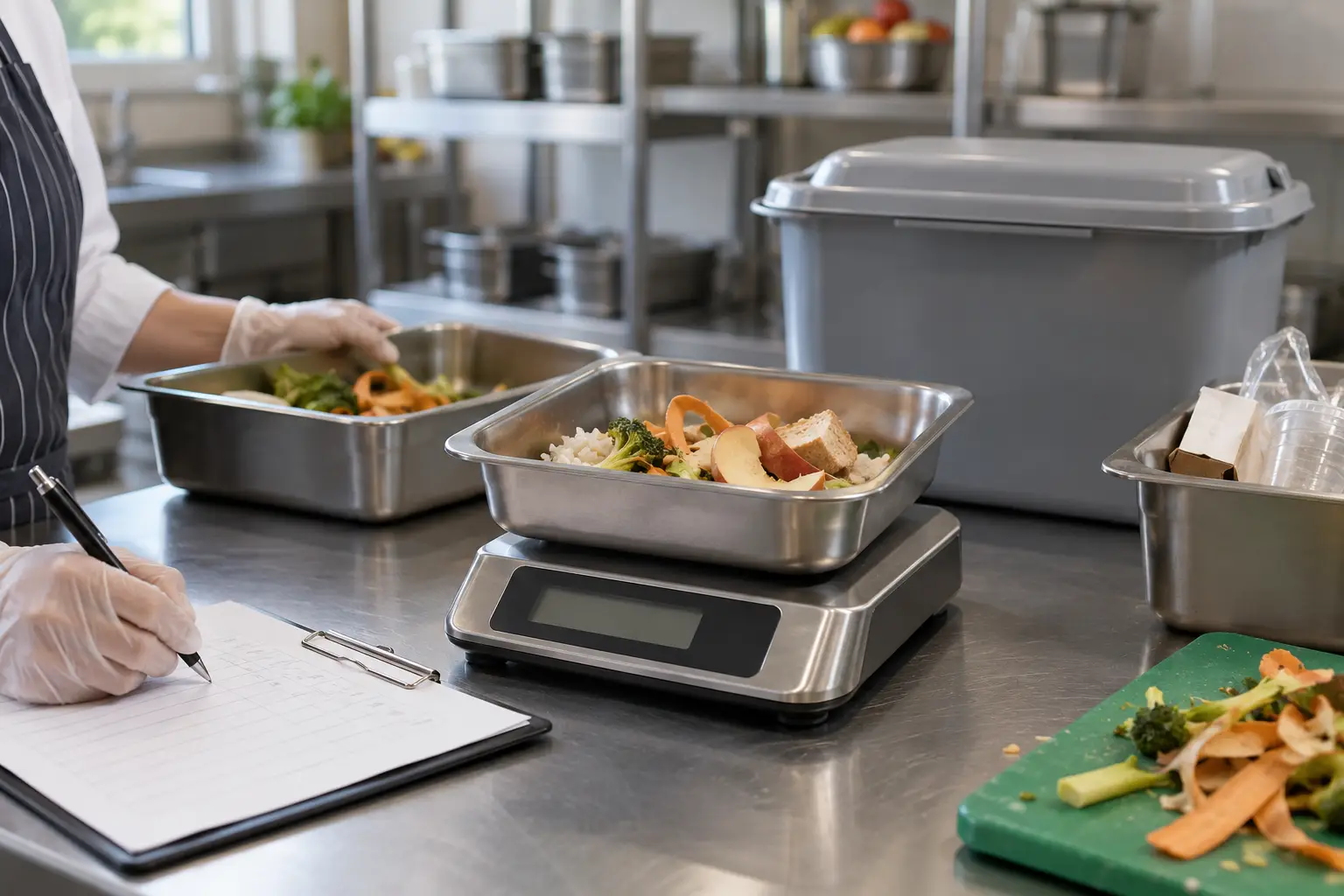
For equipment selection, weigh the remaining suitable scraps over one or two representative school weeks. This is a practical starting point, rather than a universal sizing standard. Keep kitchen preparation waste separate from plate waste so that recurring problems are visible.
Record:
- Daily food-waste weight after removing packaging and draining excess liquids.
- The busiest lunch day, as well as the normal daily amount.
- Common contaminants, such as wrappers, cutlery and food containers.
- When scraps become available and when staff can load the machine.
- Changes during exams, events, weekends and school holidays.
Student numbers help describe the school, but measured waste gives a stronger basis for choosing capacity.
Decide whether on-site equipment fits your school
A garden composting project can suit small, carefully managed quantities of suitable material. An external organics collection service may be more practical where a school has little operating space or cannot assign staff to manage treatment.
An organic waste composting machine is worth evaluating when the kitchen generates a recurring food-waste stream, staff can keep that stream clean and the school can manage both the equipment and its output. A school should make this decision before committing to a model.
Understand what the machine actually does
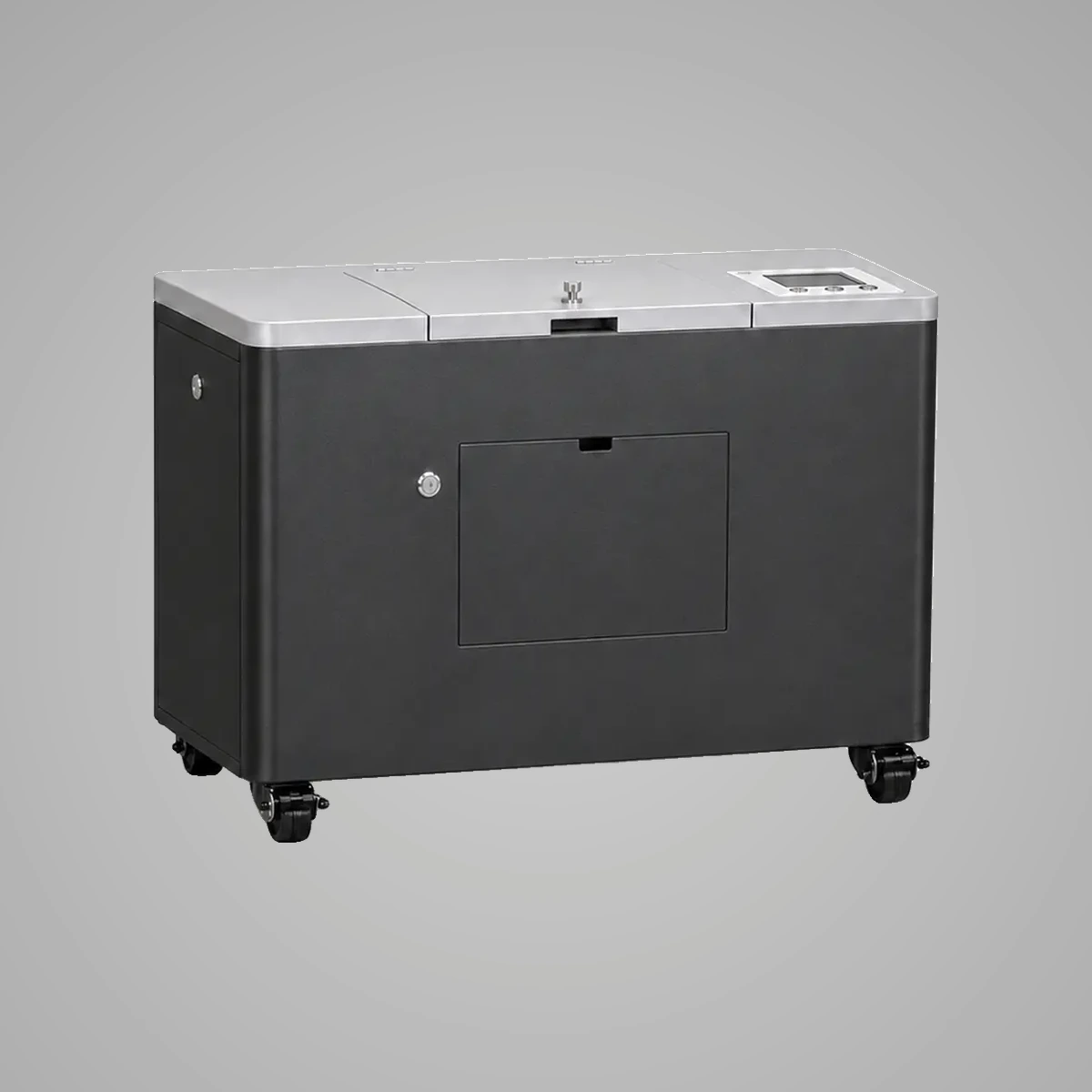
Wawli’s microbial systems process food waste in an enclosed chamber. Mixing, heat and airflow support biological breakdown, while the selected odour-treatment configuration helps manage process emissions.
Die Wawli composting technology guide lists a reference processing cycle of 12–24 hours for the Vector, Matrix and Atlas microbial ranges. Actual time depends on the model and feedstock. This describes a treatment stage, rather than confirming that discharged material is mature compost.
Keep this distinction clear when comparing equipment. Drying, biological treatment and finished-compost production are different processes, with different operating requirements and output routes.
Choose capacity from daily weight and peak demand
A commercial composting machine should fit the waste that staff will actually load. Compare the daily rating with normal and busy days, then discuss working headroom, loading arrangements and future changes with the supplier.
Wawlis commercial equipment range includes several reference capacities relevant to kitchen operations. Larger campuses can also compare the industrial range.
| Wawli model | Reference daily capacity | Question for the school |
|---|---|---|
| Vector 30 | 30 kg/Tag | Do both routine and peak loads fit within the rating? |
| Vector 50 | 50 kg/Tag | Does this provide suitable headroom for the measured waste? |
| Vector 100 | 100 kg/Tag | Can staff maintain sorting and a consistent loading routine? |
| Matrix 200 / industrial range | Matrix 200: 200 kg/day | Does a larger operation have dedicated handling space and staff? |
These ratings are comparison points, not a recommendation based only on weight. Feedstock, site conditions and operating arrangements still need confirmation.
Illustrative example: a kitchen records 25 kg of suitable scraps on typical days and 40 kg on its busiest day. A 30 kg/day unit would not cover that peak. A 50 kg/day model becomes a candidate to evaluate, alongside site fit, operating requirements and a route for occasional excess waste. These figures illustrate the decision; they are not results from a Wawli school installation.
Also distinguish kg/day from chamber volume in litres, kg/cycle and kg/hour. Those figures describe different aspects of equipment performance and cannot be substituted for one another.
Build a routine staff can repeat after every lunch
Good school food waste management starts at the sorting point. Place clearly labelled collection containers where staff and students return trays, with separate routes for food scraps, liquids and packaging.
Use a short operating sequence:
- Sort: remove plastic, glass, metal, wrappers and other foreign objects.
- Prepare: drain excess soup, sauce and visible oil; follow the selected model’s feed-preparation guidance.
- Weigh: record the suitable input and keep loading within the machine’s rating.
- Process: have a trained adult load the unit and follow its operating instructions.
- Collect and clean: manage discharged material through the agreed route and clean the handling area.
Die Vector 30 product information lists suitable raw and cooked food scraps, including fruit, vegetables, meat, fish, dairy, bread, rice and noodles. Confirm the accepted feedstock for the chosen model. Do not assume that garden waste, paper napkins or compostable packaging can be added simply because they are described as biodegradable.
Plan the installation around the whole workflow
The cabinet footprint is only part of the required space. Staff also need room to move collection bins, inspect incoming material, load safely, clean surfaces and collect output.
Before ordering, confirm the delivery route and floor loading, electrical supply, ventilation requirements, service access and any drainage or exhaust arrangements required by the selected configuration. Wawli lists indoor operation at normal temperature with ventilation for the Vector 30 and Vector 100; assess a sheltered or outdoor location separately with the supplier.
Choose an operating area that supports kitchen hygiene and keeps equipment access under staff control. Odour treatment works alongside prompt handling, appropriate loading and maintenance. It does not remove the need for those routines.
Agree an output route before switching on
A food waste composting machine needs a destination for the material it produces. That route should be part of the purchase discussion, rather than a decision left until the first unloading.
Die EPA defines compost as a biologically stable soil amendment. Partially decomposed or merely dehydrated material does not automatically meet that definition.
For a school, the next step may involve further curing, checking suitability for an intended soil use, or collection by an appropriate organic-waste service. Follow the model’s operating guide and the requirements that apply to the site and end use. Plan storage and holiday arrangements as well.
A school garden can become part of the learning programme once the material is suitable for that use; it should not be treated as an automatic destination for freshly discharged output.
Compare the full cost of operation
Evaluate the installed system and its daily routine, including equipment, electrical or ventilation work, staff time, electricity, consumables, maintenance and output handling.
Estimate possible savings from collection or disposal charges that the school can actually avoid. If a collection contract remains unchanged, reduced bin contents may not immediately reduce the invoice.
Use measured electricity consumption to assess operating cost. Rated power in kW describes equipment power; it is not the same as daily electricity use in kWh.
After commissioning, track suitable scraps treated, contamination, staff time, electricity use, downtime and the output destination. Review these alongside meal-waste prevention results so that easier treatment does not obscure opportunities to waste less food.
Make composting in schools a useful learning project
Students can help identify sorting mistakes, compare waste from different menus and produce a monthly food-waste chart. Teachers can connect these observations with lessons about resources, decomposition and food systems.
Keep loading, unloading, maintenance and equipment troubleshooting with trained adults. Student participation can centre on observation, supervised sorting and data collection. Assign a staff owner and a backup so the programme continues when individual teachers or kitchen team members are absent.
Questions schools often ask
Will the machine produce garden-ready compost in 24 hours?
A reference processing cycle does not establish compost maturity. Confirm the output characteristics and any further curing or testing needed before soil use.
Can compostable cups and cutlery go into the machine?
Only include materials accepted in the selected model’s written input guidance. A compostable label alone does not establish compatibility with a particular machine or processing cycle.
How should the system run during school holidays?
Agree a shutdown, storage and restart plan with the supplier. Include waste from holiday clubs or other activities, and assign responsibility for any material remaining on site.
Plan your school’s system with Wawli
Wawli brings equipment selection, manufacturing and project support together, with operating guidance shaped around the waste and the site. To discuss a suitable food waste composting machine, share your normal and peak daily waste weights, food types, available space and school operating calendar.
Talk to Wawli about your school food-waste project to compare capacity and plan the route from collection to processed-material handling.