Sort & load
Separate scraps from packaging, glass and metal before loading.

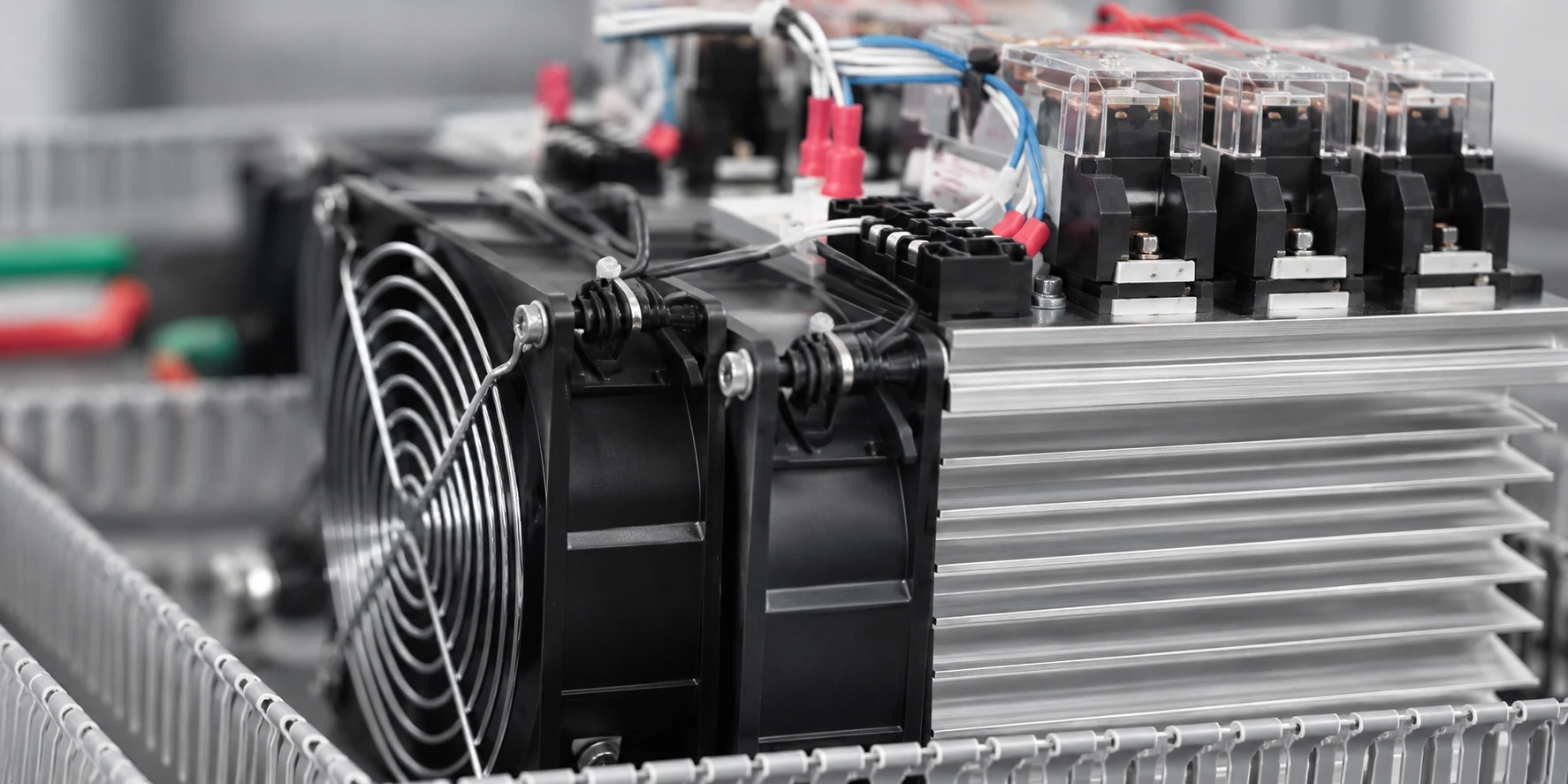
AEROBIC COMPOSTING TECHNOLOGY
THE SCIENCE BEHIND THE SYSTEM
Wawli’s microbial composting systems bring food waste, microorganisms, heat and oxygen together in an enclosed chamber. Controlled mixing and airflow support the natural breakdown of organic material, making on-site food-waste treatment part of the everyday routine.
Reference processing cycle*
Microorganisms + oxygen
Treatment close to the source
*For the Vector, Matrix and Atlas microbial ranges. Cycle time depends on the model and feedstock; it is not a measure of finished-compost maturity.
INSIDE THE MACHINE

Follow the material through the chamber and see what keeps the process moving.
Separate scraps from packaging, glass and metal before loading.
Rotating paddles mix the material and distribute heat and moisture.
Air, heat and ventilation support the process and odour control.
Remove treated material; further curing may be needed before use.
THE COMPOSTING PRINCIPLE
The machine supports a biological process. Three working conditions help microorganisms break down food waste.
Aerobic microorganisms use organic matter as a food source. As they break it down, they release heat, carbon dioxide and water, leaving a smaller amount of organic material.
Heating supports the chamber environment, while mixing spreads warmth and moisture. Balanced conditions help sustain microbial activity as the food waste changes.
Fresh air supplies oxygen; ventilation carries away water vapour and process gases. An enclosed chamber and the selected odour-treatment configuration help manage emissions.
 THE NEXT PART OF THE CYCLE
AFTER THE PROCESS
The processing cycle is one stage of the journey. The discharged material may need additional curing and checks before it is suitable for landscaping, agriculture or another soil application.
Plan the output route alongside the machine: collection, any further treatment, and a suitable end use.
Explore the technical guidesPATENTS
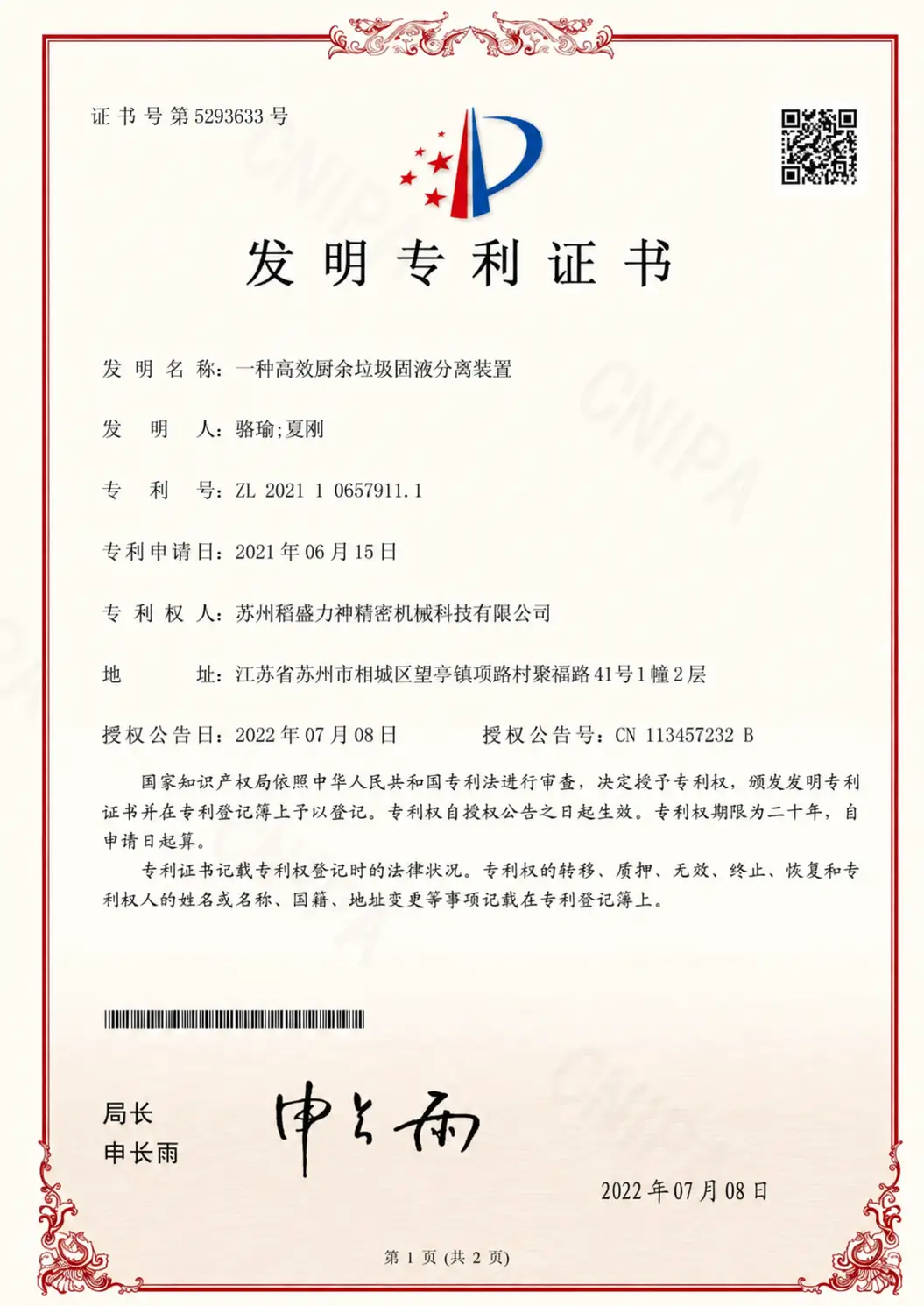
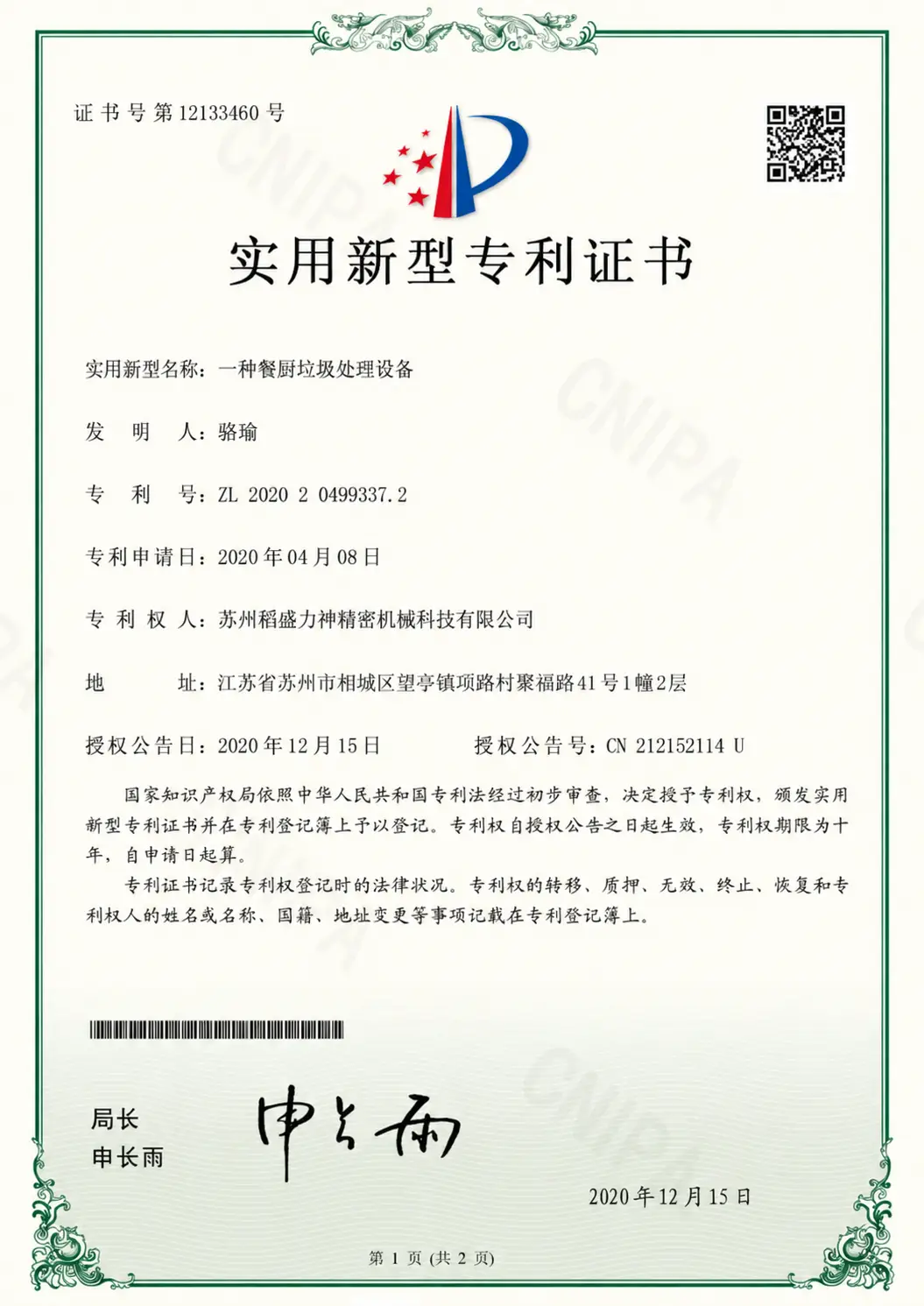
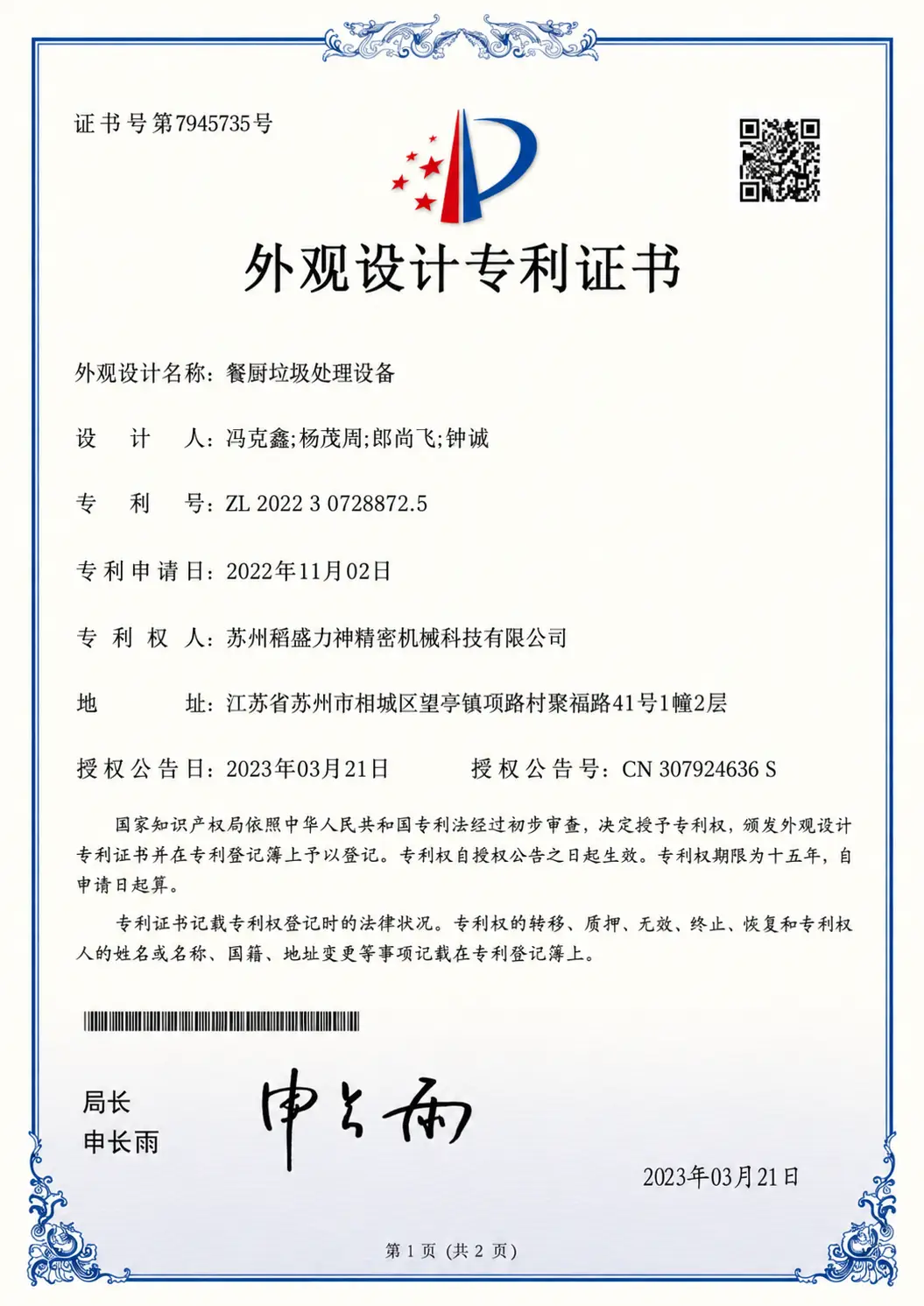
Patent certificates covering food-waste treatment equipment, solid–liquid separation and product design.
 View certificate
Invention patent
ZL 2021 1 0657911.1
Granted 08 July 2022
 View certificate
Utility model patent
ZL 2020 2 0499337.2
Granted 15 December 2020
 View certificate
Design patent
ZL 2022 3 0728872.5
Granted 21 March 2023
Certificate holder: Suzhou Daosheng Lishen Precision Machinery Technology Co., Ltd.
PROJECT CONSULTATION
Share your food-waste type, daily processing volume and available installation space. We’ll help you select suitable equipment and a treatment process.