01

Sort and load
Remove non-organic items, then place suitable raw or cooked food scraps into the chamber.

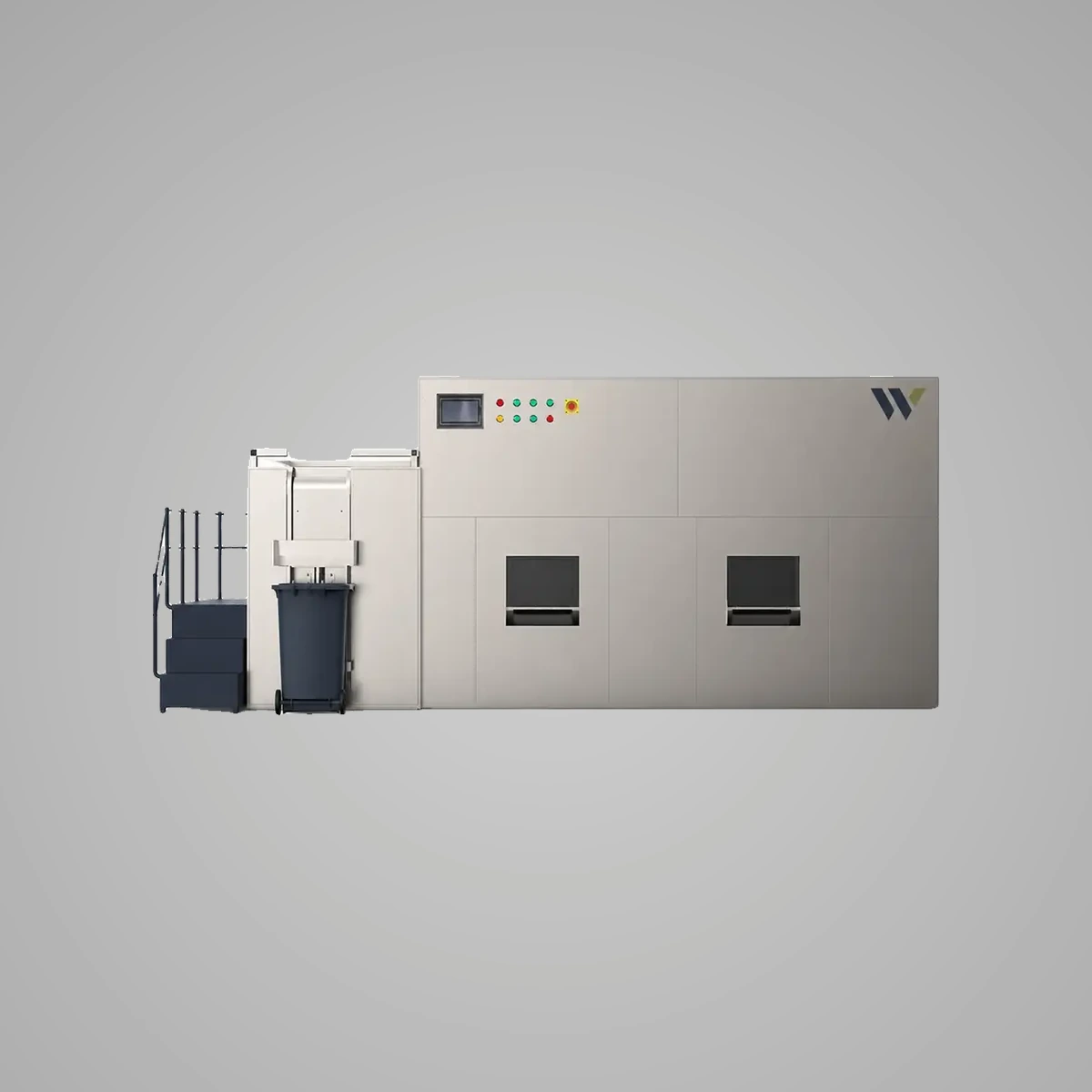
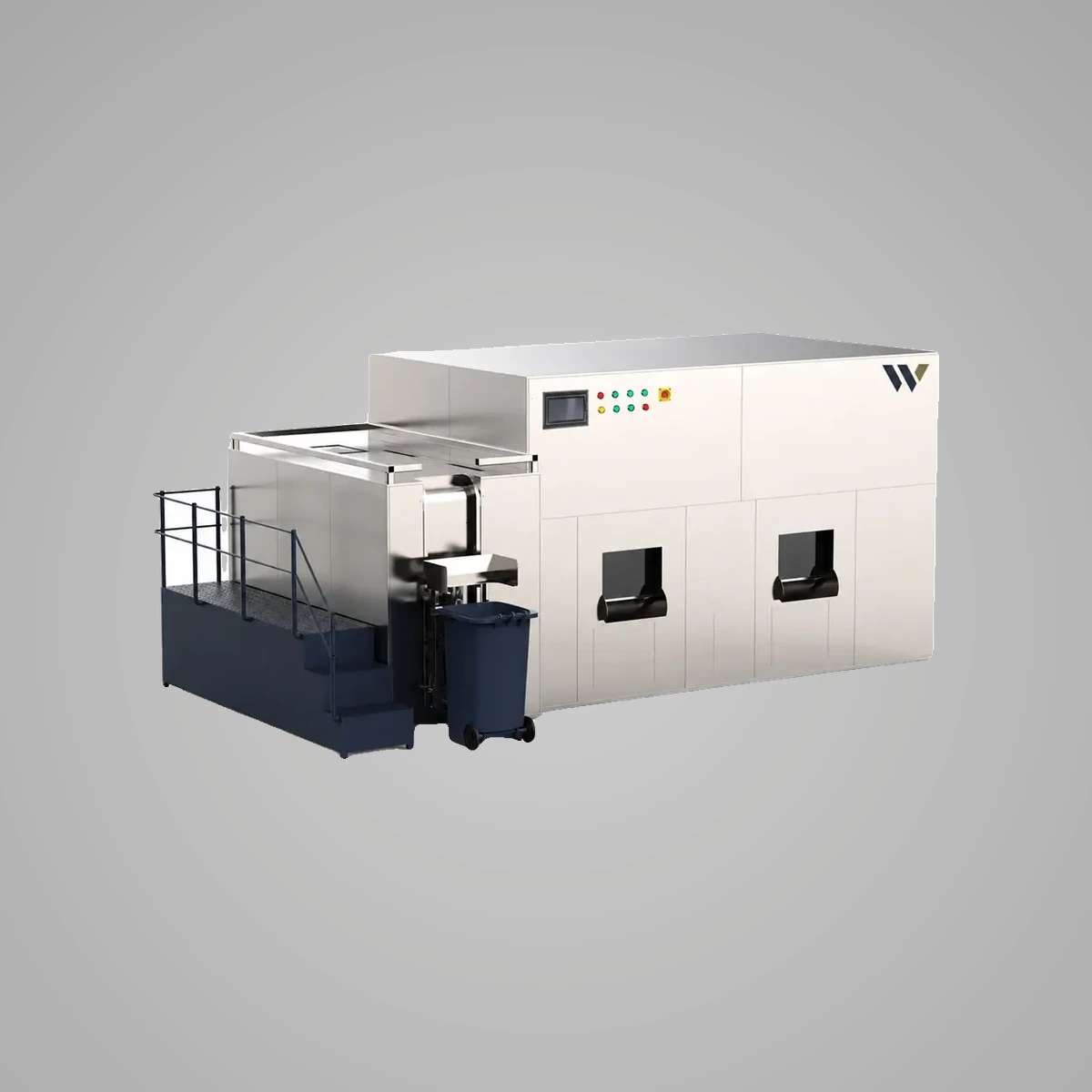
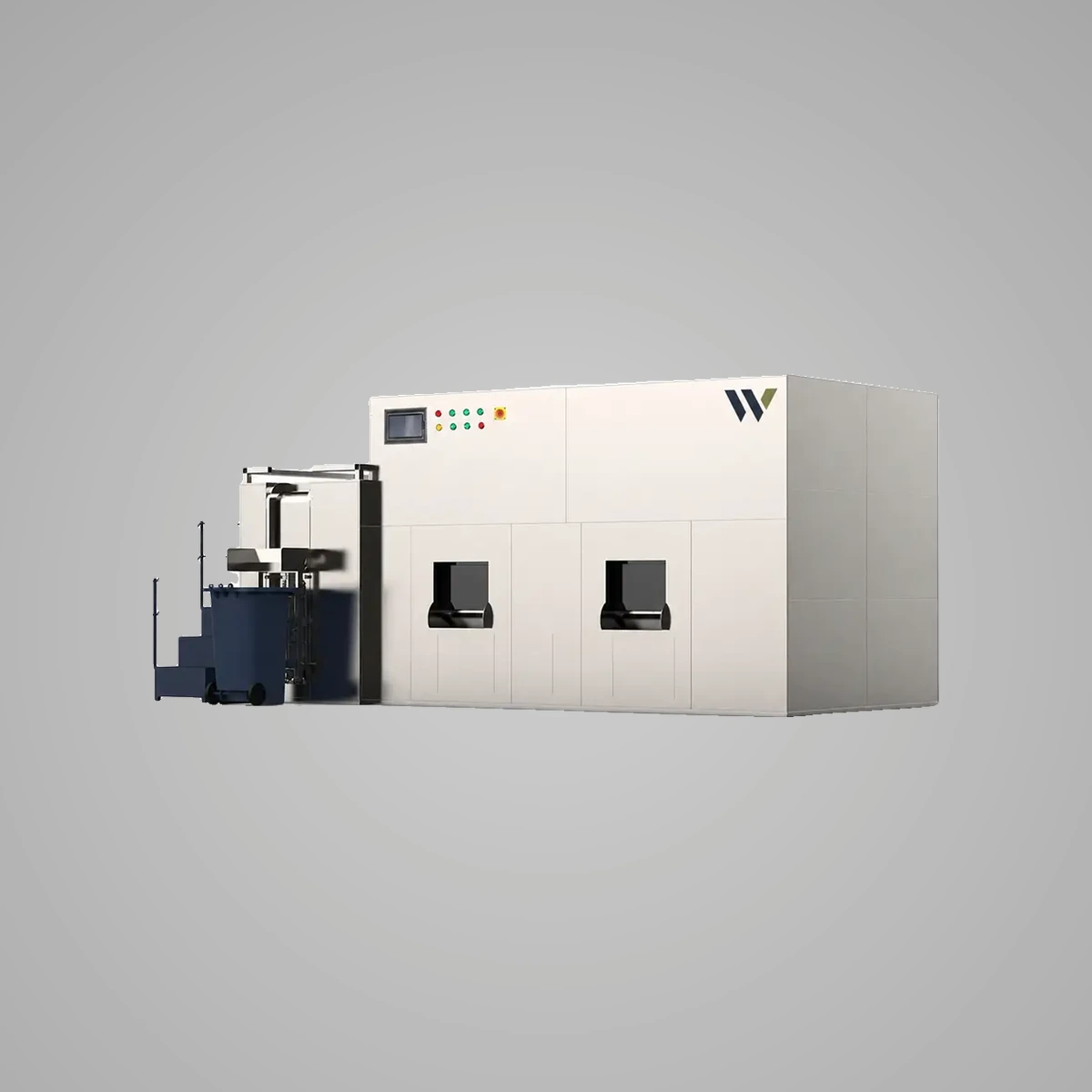
Large-scale industrial composter
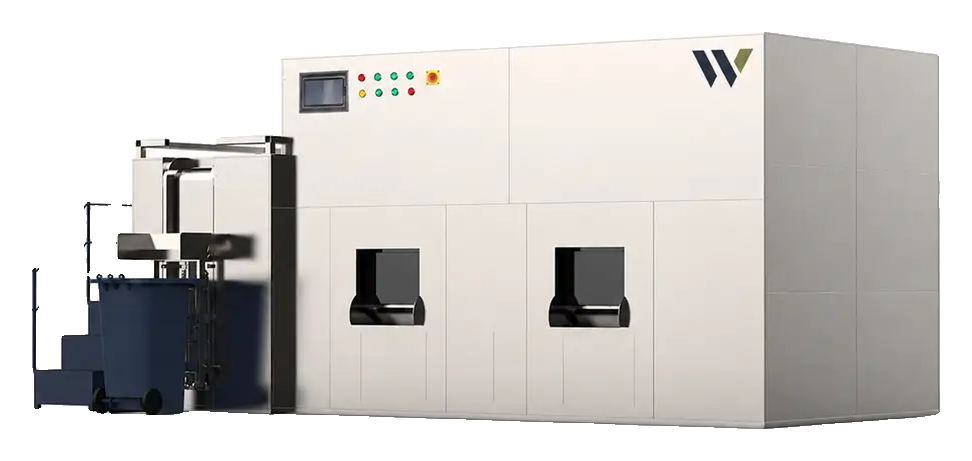
The Wawli Atlas 3000 is a 3,000 kg/day large-scale industrial composter for high-volume food and organic-waste operations, with an enclosed 12–24-hour microbial process, automatic control and configured deodorization.
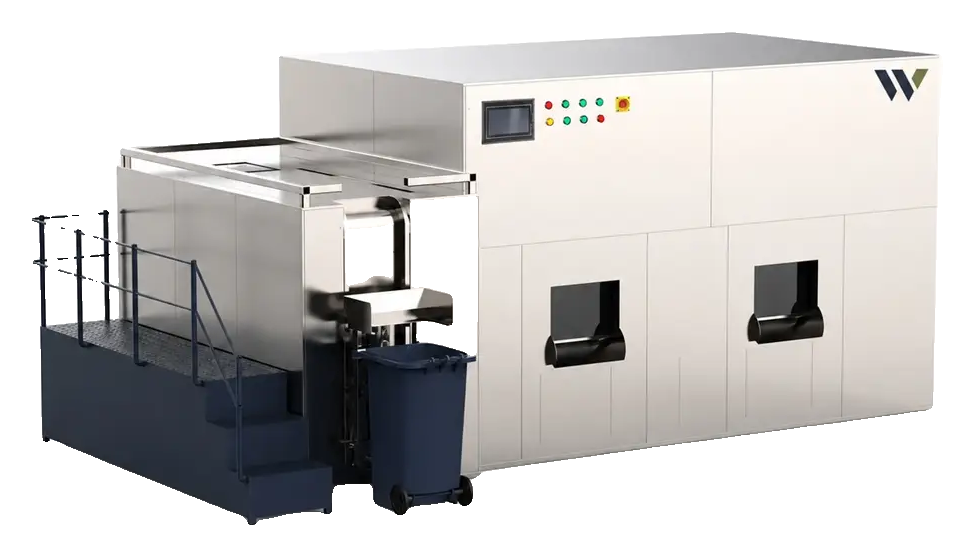
Large-scale industrial composter
Wawli Atlas 3000 is designed for centralized or high-volume organic-waste projects. Its enclosed processing system and integrated material handling support recurring loads, while final model selection depends on measured site volumes, feed preparation and the project operating plan.
Applications
With a verified 3,000 kg/day reference capacity, Wawli Atlas 3000 is designed for large industrial-grade organic-waste operations. Its position within the Atlas range suits sites that handle sustained volumes beyond the Matrix series and can support the required material-handling workflow.
Applications include food-processing facilities, large industrial kitchens, major institutional campuses and high-volume central catering operations with sustained, source-separated organic-waste streams.
How it works
Microbial decomposition works inside the enclosed chamber, supported by automatic control and internal deodorization, with an external deodorizer available as an option.
Remove non-organic items, then place suitable raw or cooked food scraps into the chamber.
Use the front control system to begin the configured automatic processing cycle.
The enclosed system supports microbial decomposition over a reference period of 12–24 hours.
Collect the processed organic output and follow the operating guide for handling and use. The 12–24-hour processing cycle does not by itself establish compost maturity or fertilizer quality; further curing, testing or handling may be needed before the intended use.
Input guidance
The chamber can accept suitable raw and cooked food scraps. Keep the feed stream free from packaging and other non-organic contaminants.
Do not load plastic, glass, metal or other non-organic objects. Follow the operating guide for feed preparation and loading limits.
Key features
Verified operating details, presented in the same clear Wawli format.
Reference daily capacity for high-volume food-service and industrial organic-waste streams.
Integrated processing and material-handling equipment within a large-scale industrial enclosure.
Specified processing window for the microbial decomposition method.
Specified food-waste volume reduction under suitable operating conditions.
Internal deodorization is standard, with an external deodorizer available as an option.
Intelligent control includes automatic fault-alarm functionality.
Technical data
Verified capacity, dimensions, processing method and operating requirements for the Wawli Atlas 3000.
Product FAQ
Clear answers based on the verified product information.
Use weighbridge or collection records to map average and peak daily volumes, arrival times and seasonal changes. Compare the peak pattern with Wawli Atlas 3000's 3,000 kg per day rating, not only the annual total. At this scale, food waste management also needs enough receiving capacity to stop incoming vehicles or bins from waiting for the processing line.
Test the incoming organic waste for contaminants, moisture, oil and particle size before fixing Wawli Atlas 3000's line design. Sorting is always required. Shredding, dewatering and conveying should be added only where the feed or loading route needs them. The aim is a matched line, not the longest possible equipment list.
Set collection windows and loading shifts around Wawli Atlas 3000's 12 to 24 hours process, then size receiving storage for material that arrives during the cycle. Keep incoming wet waste and processed output in separate areas. The buffer should absorb a late delivery or busy shift without forcing the compost machine or collection team to stop.
Place Wawli Atlas 3000 only after the project has mapped vehicle access, receiving space, power, drainage, ventilation or odor control, conveyors, service clearances and output storage. Walk through the route for both material and staff. A workable industrial composting layout depends on those movements, not just on whether the machine footprint fits the drawing.
Assign responsibility for Wawli Atlas 3000 on every active shift. Operators oversee sorting and loading, check the control status, remove output and record cleaning or alarms. They do not need to watch the machine continuously, but a large food waste line still needs clear handovers, scheduled inspections and one person who owns each operating check.
Estimate Wawli Atlas 3000's output containers and holding space from actual operation, then confirm whether the material will be further cured, used according to project guidance or collected for another treatment step. Collection, pretreatment, loading and output handling should be treated as one operating line. A defined destination keeps food waste recycling from becoming a storage problem after processing.