Technology & Insights
How Food Waste Composting Systems Work: A Controlled Biological Process
A practical explanation of the biological and mechanical conditions that shape controlled food waste composting—from feedstock and aeration to moisture, mixing and output handling.
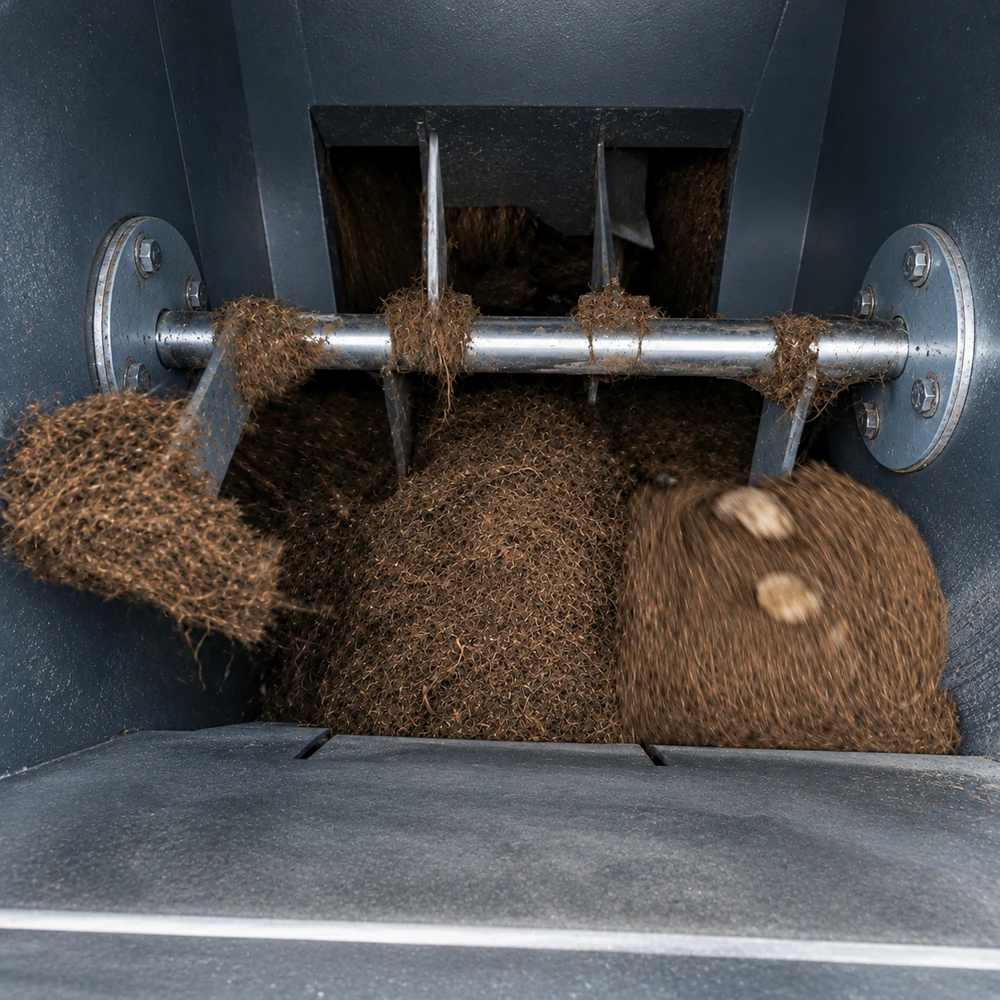
Mechanical agitation inside an organic waste treatment chamber.
Food waste composting is a controlled biological process. Reliable on-site treatment depends on managing feedstock, oxygen, moisture, temperature, mixing and the way processed material is handled afterwards—not simply placing scraps in a heated container.
At Wawli, system configuration varies by model and application, but the operating logic remains consistent: receive a suitable organic waste stream, maintain controlled processing conditions, and manage the resulting output according to the selected process and local requirements.
Start with the waste stream
Good treatment begins before the machine starts.
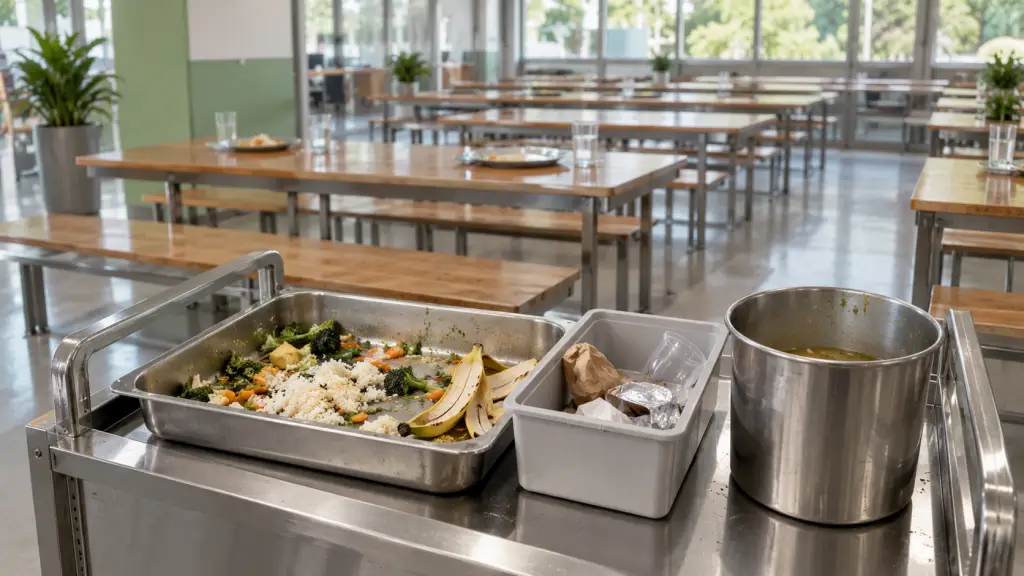
Food scraps should be separated from non-organic contaminants such as plastic, glass and metal. The composition and moisture of the load also matter. A hotel kitchen, supermarket preparation area and food-processing line may all generate organic waste, but their material streams can differ significantly in consistency, particle size, contamination risk and daily loading pattern.
For commercial and industrial projects, it is therefore useful to define the waste stream before selecting equipment. Daily volume alone is not enough. Operators should also consider what the material contains, how it reaches the machine, when loads arrive and what will happen to the processed output.
Microorganisms drive aerobic decomposition
Composting is a biological process. Microorganisms break down organic material while using oxygen, moisture and nutrients in the feedstock.
In a controlled composting system, the machine supports this biological activity by helping maintain suitable treatment conditions inside an enclosed chamber. Depending on the model, this can include managed heating, aeration and mechanical agitation.
The purpose is not to replace biology with machinery. The equipment creates a more controlled environment in which biological decomposition can take place more consistently than it would in an unmanaged pile. Wawli explains this treatment approach in more detail on its Technology page.
Aeration keeps the process aerobic
Oxygen is one of the basic requirements of composting.
If an organic waste mass becomes poorly aerated, anaerobic conditions can develop. That can slow the intended process and contribute to undesirable odours. Controlled air supply, chamber design and material movement therefore play an important role in maintaining aerobic treatment conditions.
Wawli systems combine air management with other process controls according to the model and application. For larger units, the air-management strategy may also work alongside enclosed deodorization or filtration measures.
Agitation improves material contact
Mechanical mixing helps redistribute material inside the chamber.
This matters because a food-waste load is rarely uniform. Some areas may contain wetter material, larger particles or different densities. Agitation helps expose more of the material to oxygen and the active treatment environment while supporting more consistent movement through the chamber.
The exact mechanical arrangement varies across equipment. Some systems use integrated agitation, while project-scale installations may also include lifting, feeding or discharge equipment to reduce repeated manual handling.
Temperature and moisture are linked controls
Microbial activity naturally generates heat during aerobic decomposition, while engineered systems may also use controlled heating to support the treatment environment.
Temperature should not be treated as a single universal number for every machine or every waste stream. The required cycle depends on the selected equipment, operating mode, load and applicable hygiene or output requirements. For that reason, Wawli publishes model-specific operating information rather than applying one cycle claim across every product.
Food waste often contains a large amount of water. Too much or too little moisture can affect microbial activity, airflow and material handling. A stable process therefore depends on the relationship between moisture, aeration, temperature and the characteristics of the feedstock.
| Process | Primary mechanism | Output wording |
|---|---|---|
| Composting | Managed biological decomposition | Depends on biological stability and local requirements |
| Drying | Moisture removal | Dried organic residue unless further verified |
This is why food waste drying and food waste composting should not be treated as the same process. A dryer is designed primarily to remove moisture. A microbial composter is designed around biological decomposition. The correct output description and downstream route should follow the actual treatment method.
What happens to the output?
Processed organic material is collected after the treatment cycle or according to the system’s operating routine.
The next step depends on the technology, the degree of biological stability, model instructions and local regulations. Some composting outputs may require further curing or controlled use before application. Material produced by a food waste dryer should be treated as dried organic residue unless further processing and verification establish a different end use.
For operators, output planning should be part of the equipment decision from the beginning. Storage, collection, curing, reuse and off-site removal all influence the overall system design.
The machine is only one part of the system
A reliable food-waste treatment project includes more than the processing chamber itself.
For larger sites, collection bins, contamination control, feeding method, operator access, utilities, ventilation, deodorization and output handling should be considered together. The best equipment selection starts with the real operating case rather than a headline capacity alone.
Wawli’s product range spans compact household systems, commercial units and industrial equipment. Each configuration should be matched to the material stream, available space, daily volume and operating requirements of the site.
Frequently asked questions
Practical questions about food waste composting
Is food waste composting the same as food waste drying?
No. Composting is based on managed biological decomposition, while drying primarily removes moisture. The output and downstream handling requirements can therefore be different.
Why is aeration important in a food waste composter?
Aeration supplies oxygen for aerobic microorganisms and helps maintain the intended biological treatment conditions inside the system.
Does every Wawli composter use the same process time?
No. Cycle time and operating conditions vary by model, load and application. Use the verified technical information for the selected Wawli system.
What should be checked before selecting a composter?
Start with the waste composition, measured daily volume, loading pattern, contamination risk, site space, utilities and planned route for the processed output. See the broader Wawli FAQ for additional planning guidance.
Planning an on-site system?
Match the process to the real waste stream.
Review Wawli’s treatment approach or share your waste stream and site requirements for a project-specific discussion.