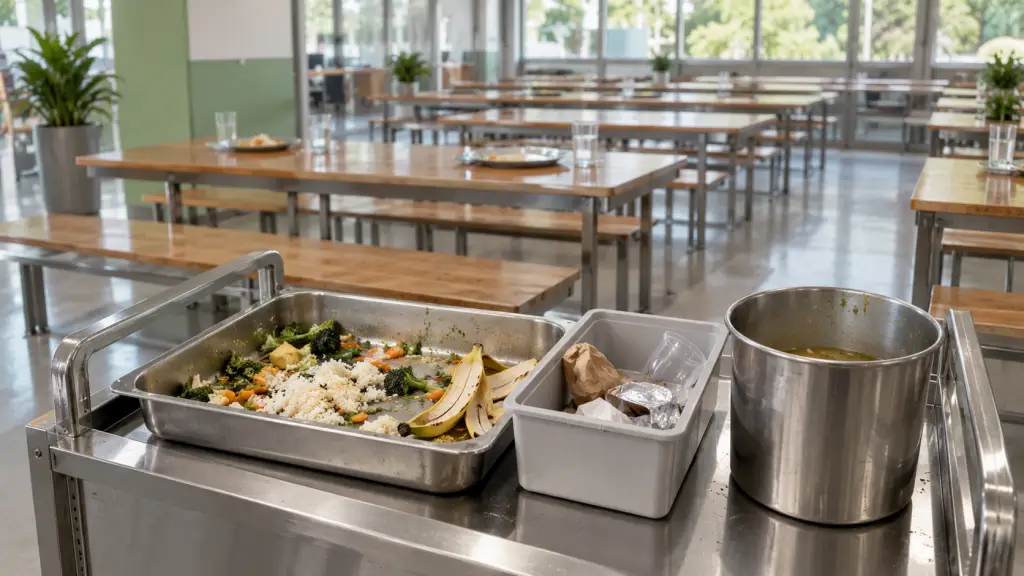
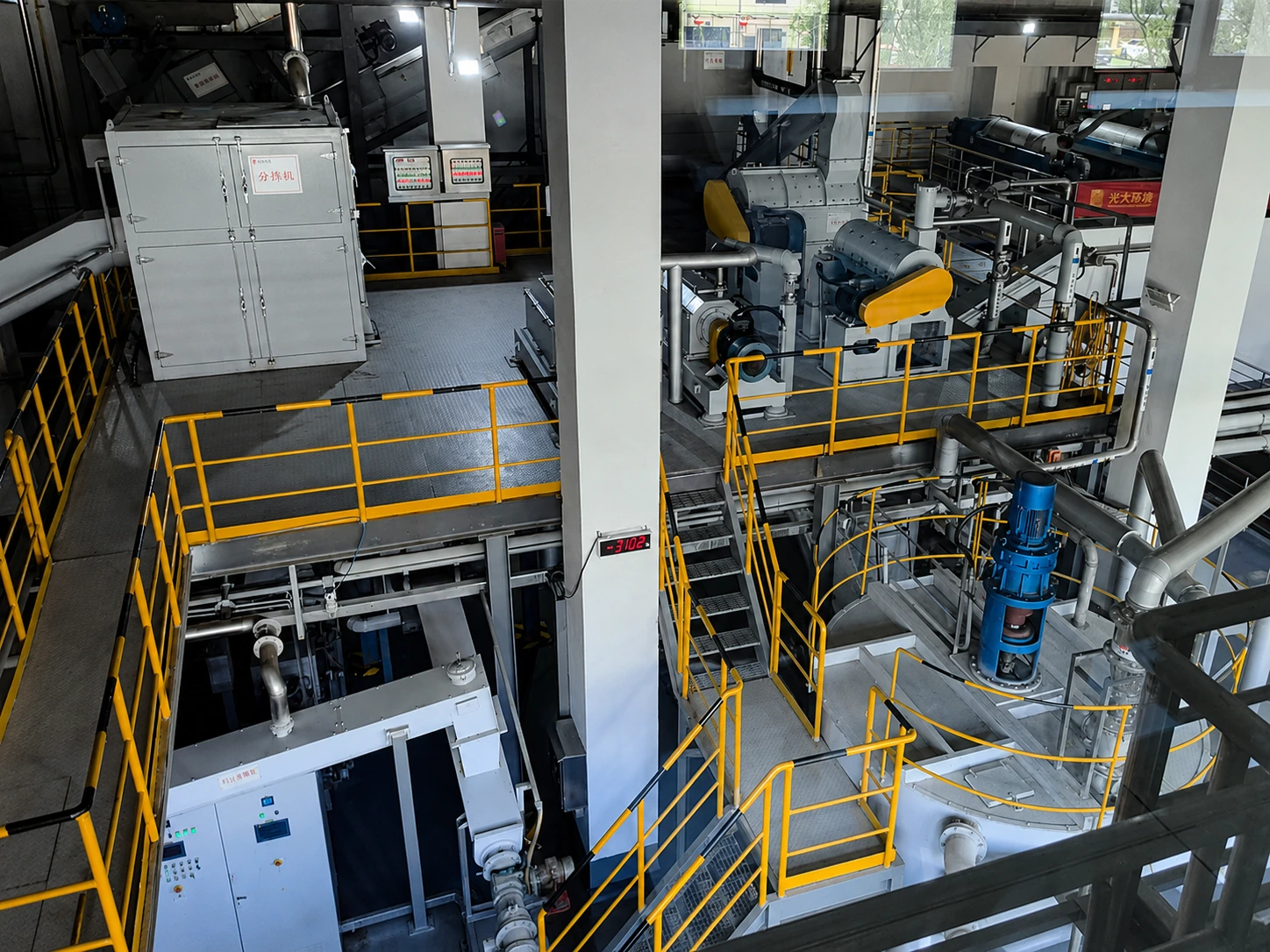
Technology & Insights
What Is Commercial Composting? Process, Scale, and Facility Controls
Commercial composting applies the same biological fundamentals as smaller systems, but adds organised receiving, monitoring, sanitation, odour management and output quality control at a much larger operating scale.
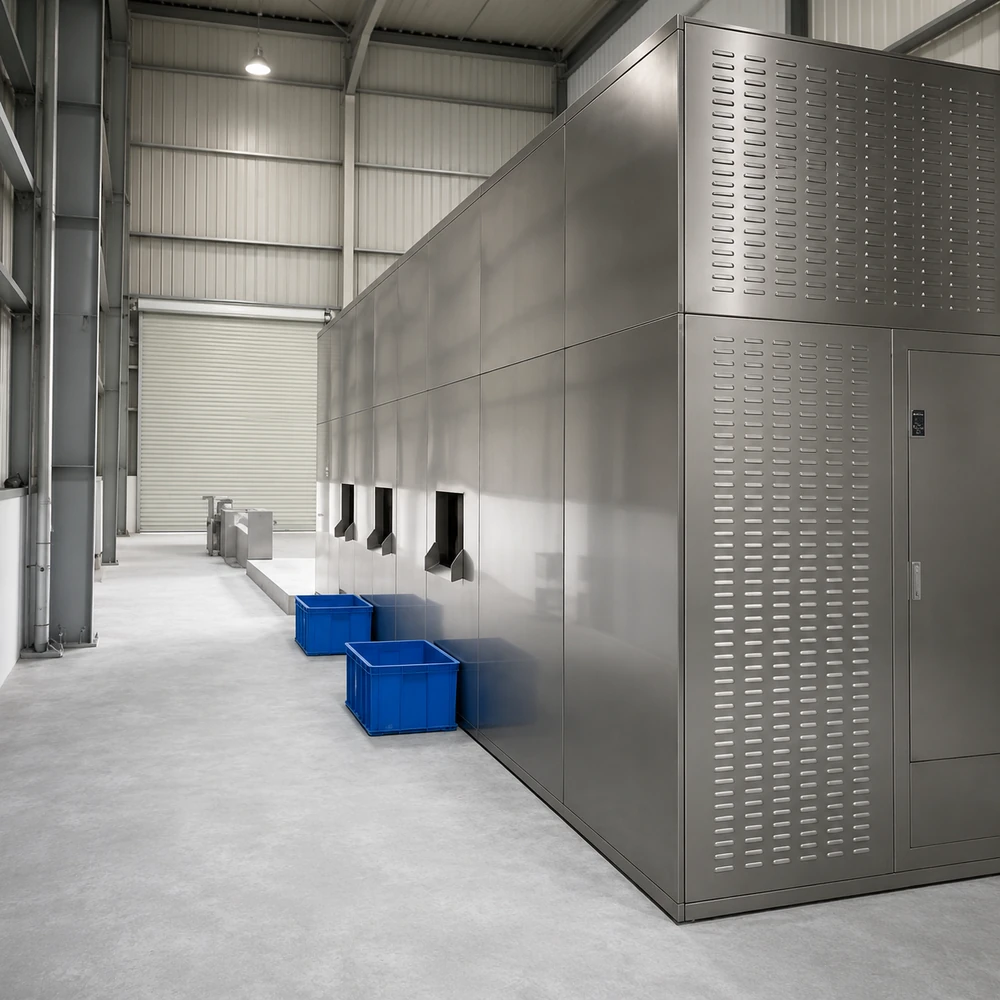
Project-scale stainless-steel organic waste processing installation.
Commercial composting applies the same biological fundamentals as smaller systems, but adds organised receiving, monitoring, sanitation, odour management and output quality control at a much larger operating scale.
A managed aerobic process
So, what is commercial composting? It is the controlled, oxygen-dependent decomposition of organic material at a facility designed to receive, process and document larger or more varied feedstock streams.
Scale does not remove the biological requirements. Microorganisms still need carbon, nitrogen, moisture and oxygen; the facility adds equipment and procedures that keep those conditions within an operating range.
Receiving and inspection come first
Loads are weighed or recorded, checked against acceptance rules and directed to a clean unloading area. Visible plastic, glass, metal and other contaminants should be removed before size reduction makes them harder to separate.
Traceability helps operators connect a contamination event or moisture shift to its source. Repeated problems can then be addressed with the generator or haulier.
Preparation creates a workable recipe
Food waste may be depackaged, shredded or blended with dry bulking material. The goal is not simply smaller particles; it is a mixture with enough structure, moisture balance and porosity for air to move through.
Recipe decisions should account for seasonal variation. Produce loads, dining waste and industrial by-products can behave differently even when their measured weight is similar.
Active treatment can take several forms
Windrows are elongated piles that are turned. Aerated static piles use forced or passive airflow with limited turning. In-vessel systems enclose the active stage and may integrate agitation, aeration and temperature management.
No format is automatically best. Site area, feedstock, climate, odour sensitivity, labour and throughput determine which configuration fits.
Monitoring turns equipment into a process
Temperature is important for biological activity and sanitation, but it must be read alongside oxygen, moisture, odour, pressure and material appearance. A hot but oxygen-starved mass is not a healthy process.
Operators need defined responses: when to turn, add structure, adjust airflow, correct moisture or hold material for further treatment.
Curing and screening finish the job
Material leaving the active stage may still need time to stabilise. Curing allows slower biological reactions to continue with less intensive management.
Screening removes oversized pieces and remaining physical contamination. Overs can sometimes return as structural material if they are clean and suitable.
Facility design includes neighbours and people
Traffic flow, drainage, leachate control, wash-down areas, fire prevention and odour containment are part of commercial composting—not secondary details.
Clear zoning between incoming feedstock, active treatment, curing and finished product reduces cross-contamination and makes inspections easier.
Frequently asked questions
Is commercial composting always in-vessel?
No. Facilities may use windrows, aerated static piles, in-vessel equipment or a combination.
Why can facilities accept materials a backyard pile cannot?
They may have higher controlled temperatures, better aeration, pest controls and documented sanitation procedures.
Is material finished when the active stage ends?
Not necessarily. Curing, stability checks and screening may still be required.
Sources and further reading
Plan a controlled process
Match the system to your feedstock and site.
Review process technology, product formats and project requirements with Wawli.