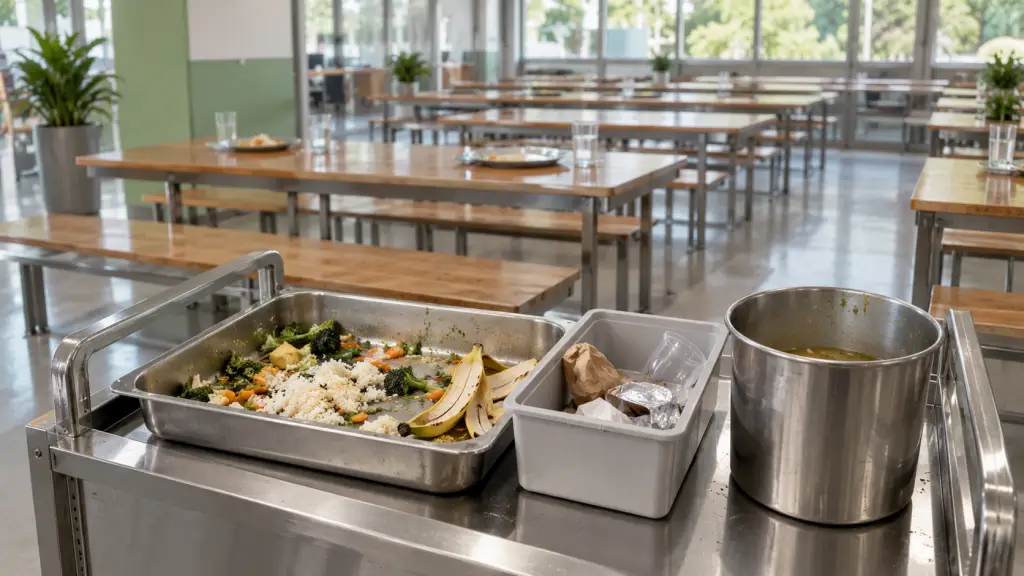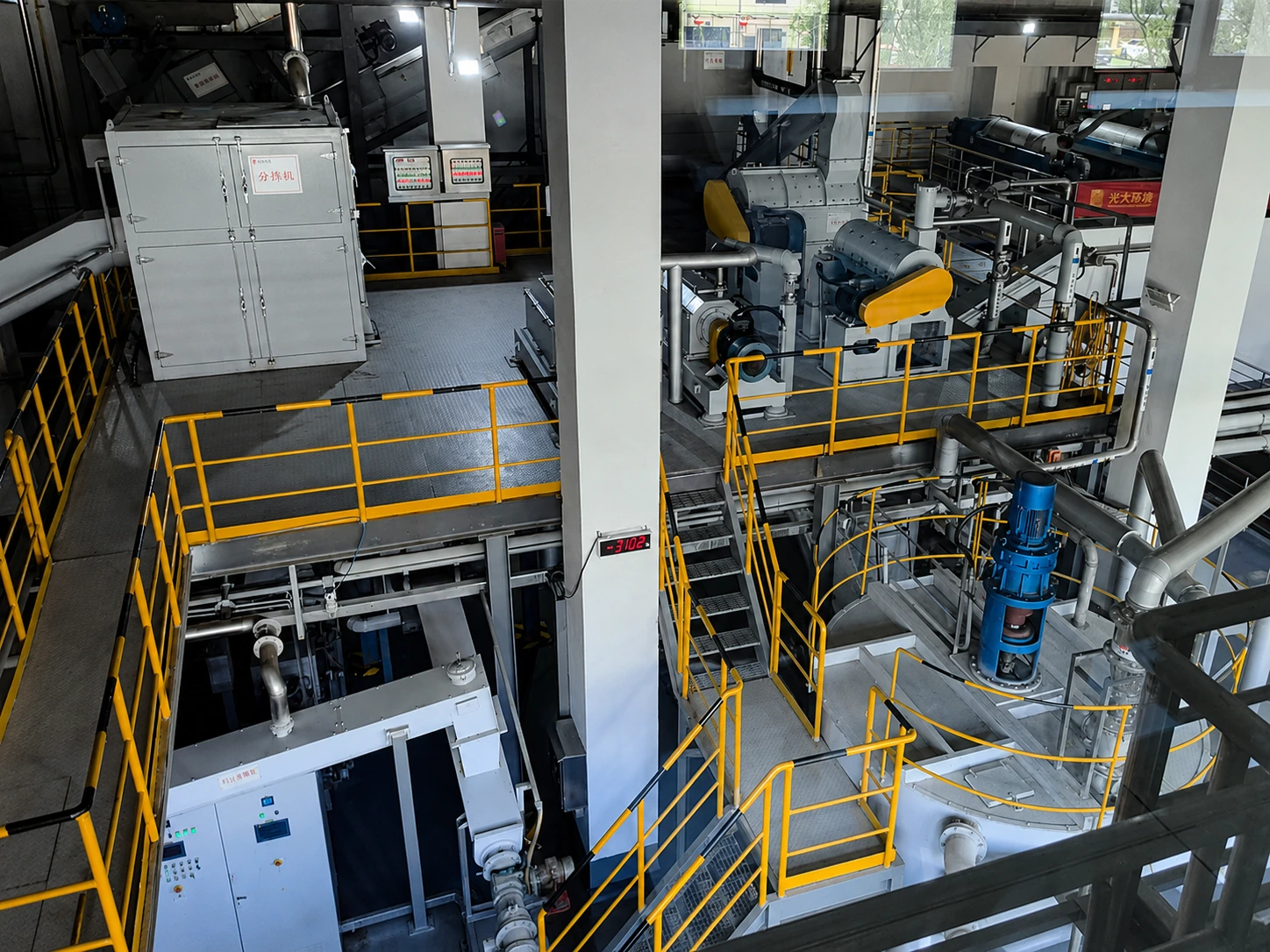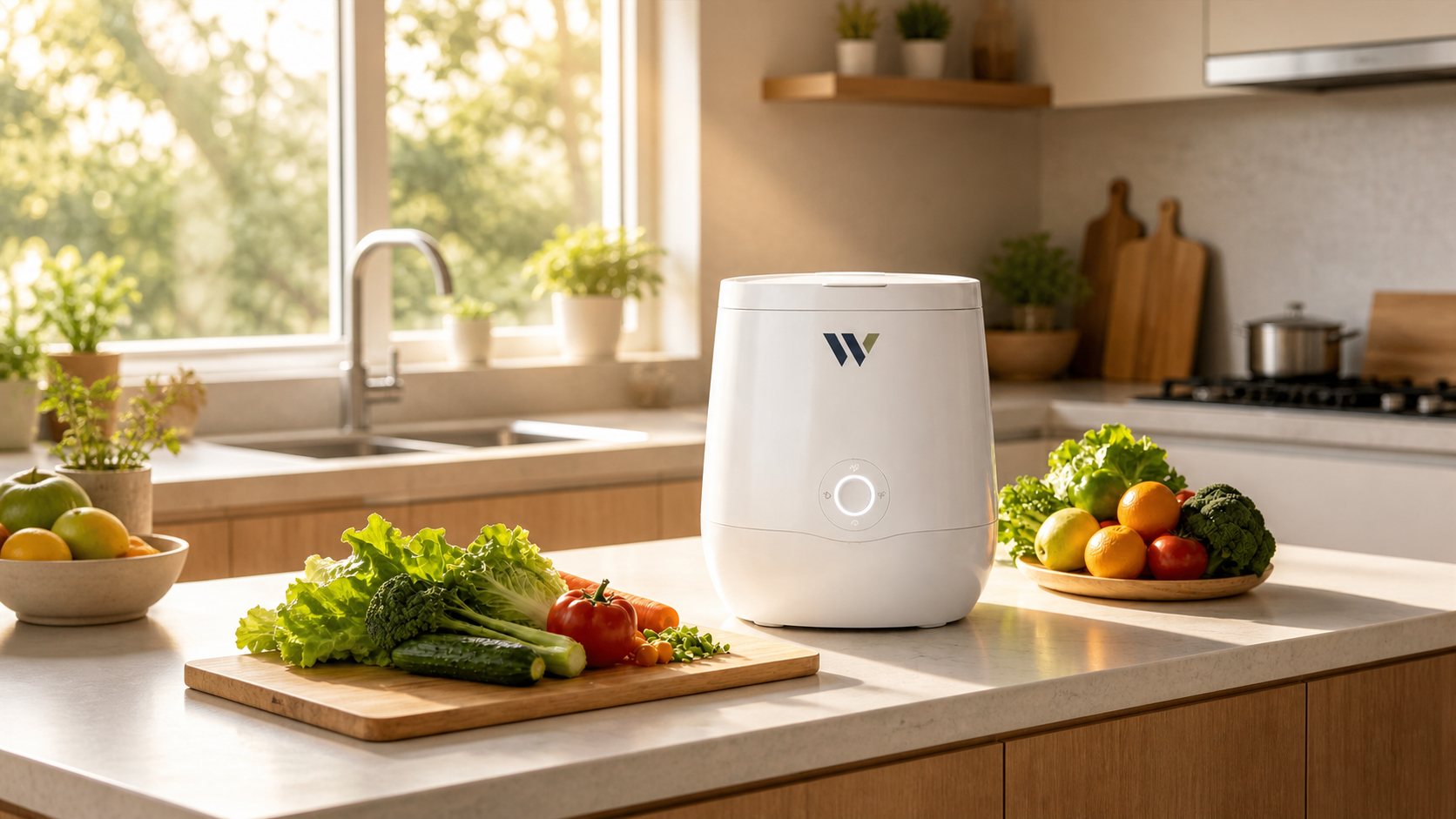
A countertop composter sounds almost suspiciously convenient. Add yesterday’s coffee grounds, a tired carrot and the rice nobody claimed from the fridge. Press a button. Return later to a smaller, drier batch. The sad carrot has found a second career. The photo above shows the Wawli Element 3 in a home-kitchen setting.
The name can cause confusion. Many products sold as an electric composter, compost machine or kitchen counter composter grind and dehydrate food scraps. That is useful preprocessing, but the result may not be mature compost. The US Environmental Protection Agency says these appliances produce a dried food-scrap mixture that can be added to a composting system. Compost is a biologically stable soil amendment made through managed aerobic decomposition.
That distinction is not a technicality invented to spoil the fun. It tells you what to do with the output and helps you choose the right machine for your routine.
What is a countertop composter?
A countertop composter is a compact powered appliance designed to process household food scraps indoors. Depending on the model, it may use heat, grinding, aeration or a combination of methods to reduce moisture and particle size. Product designs vary, so the manufacturer’s instructions remain the final word on accepted scraps, cycle settings and maintenance.
The search term countertop composter covers several kinds of equipment. Some brands call the appliance a food recycler. Others use composter machine, composting machine or kitchen compost machine. The labels overlap, but the end products do not always match.
Ask, “What comes out, and where can that material go next?” Countertops, charming as they are, do not grant instant diplomas in soil science.
How an electric composter processes food waste
Many household machines follow three broad steps:
- Heat removes part of the moisture from the scraps.
- A mixing or grinding system reduces the material into smaller pieces.
- A cooling stage makes the processed material easier to handle.
The order differs by model. Some systems also circulate air or filter odors. A smaller, drier output can be easier to store before collection or further composting.
A countertop unit can support indoor composting without replacing every other step. Whether the output needs curing, belongs in a compost pile or should enter a local organics program depends on the appliance and local rules.
Countertop composter vs traditional composting
| Question | Countertop food-waste appliance | Traditional composting |
|---|---|---|
| Where does it happen? | Indoors, using electricity | In a managed pile, bin or facility |
| What drives the process? | Model-specific heat, grinding and/or aeration | Microorganisms, oxygen, moisture and time |
| What is the usual immediate result? | Reduced or preprocessed food scraps | Biologically stable compost after decomposition and curing |
| What happens next? | Follow the product and local disposal guidance | Use mature compost as a soil amendment |
Traditional composting is biology with a schedule of its own. A powered appliance is a kitchen tool. Neither description is an insult. A dishwasher is not a river, but it still saves a great deal of scrubbing.
What can you put in a countertop composter?
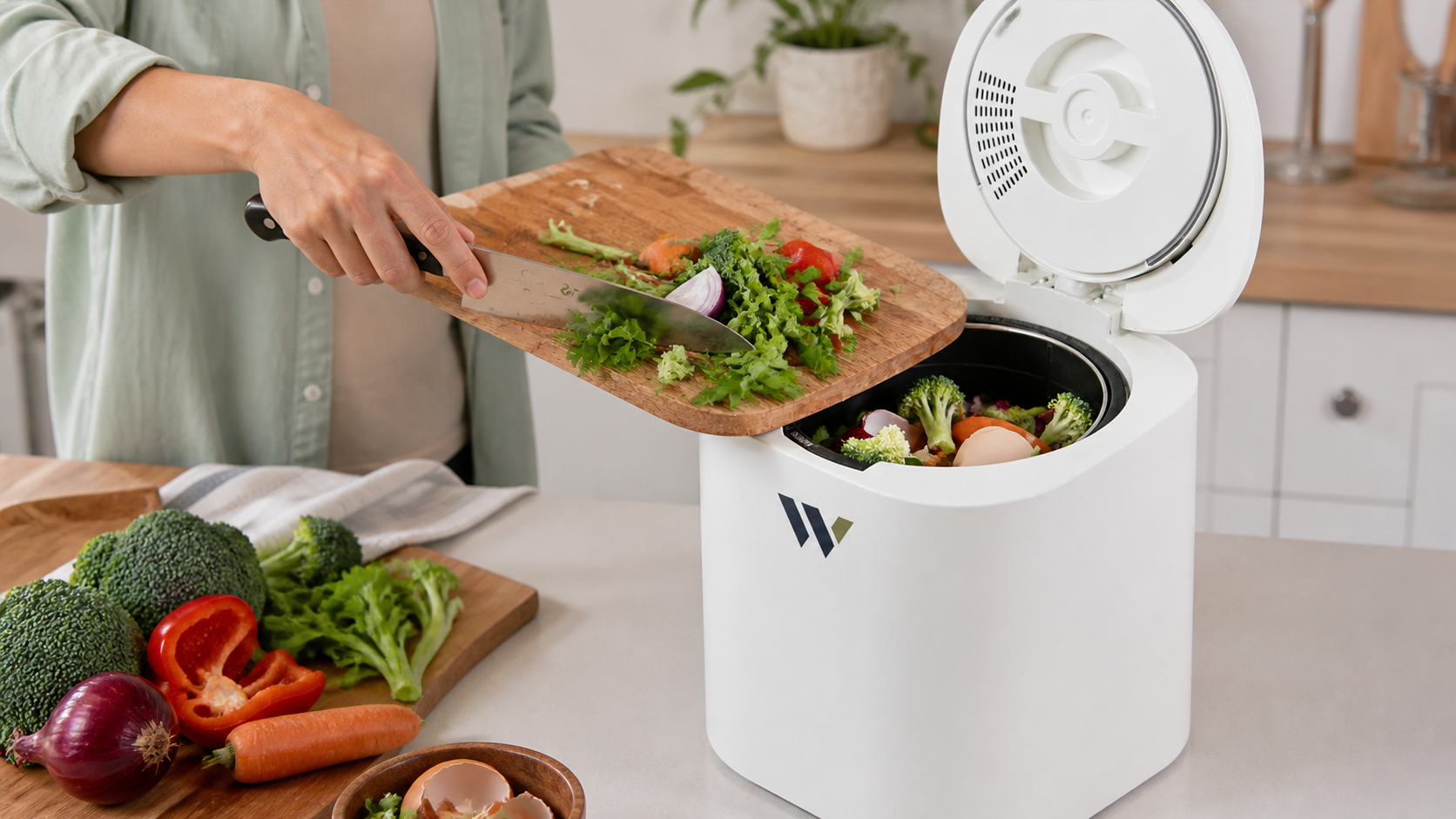
If you are wondering what can you compost, start with the difference between a backyard pile and an appliance. The photo above shows kitchen prep scraps being loaded into the Wawli Element 1. The EPA lists fruit and vegetable scraps, coffee grounds with paper filters and crushed eggshells among suitable materials for backyard composting. It advises home composters to avoid meat, fish, dairy, grease and most cooked food because these can attract animals or may not break down fully in a typical backyard pile.
An appliance may accept a different mix. That is why searches such as can you compost bread, can you compost meat and can you put meat in compost do not have one universal answer.
For the appliance, check limits on bones, oils, liquids, fibrous material and large quantities of one food. For a backyard pile, follow composting guidance. For a municipal program, follow its list. Three destinations, three rulebooks. Your leftover lasagna does not get diplomatic immunity.
Indoor composting for apartment dwellers
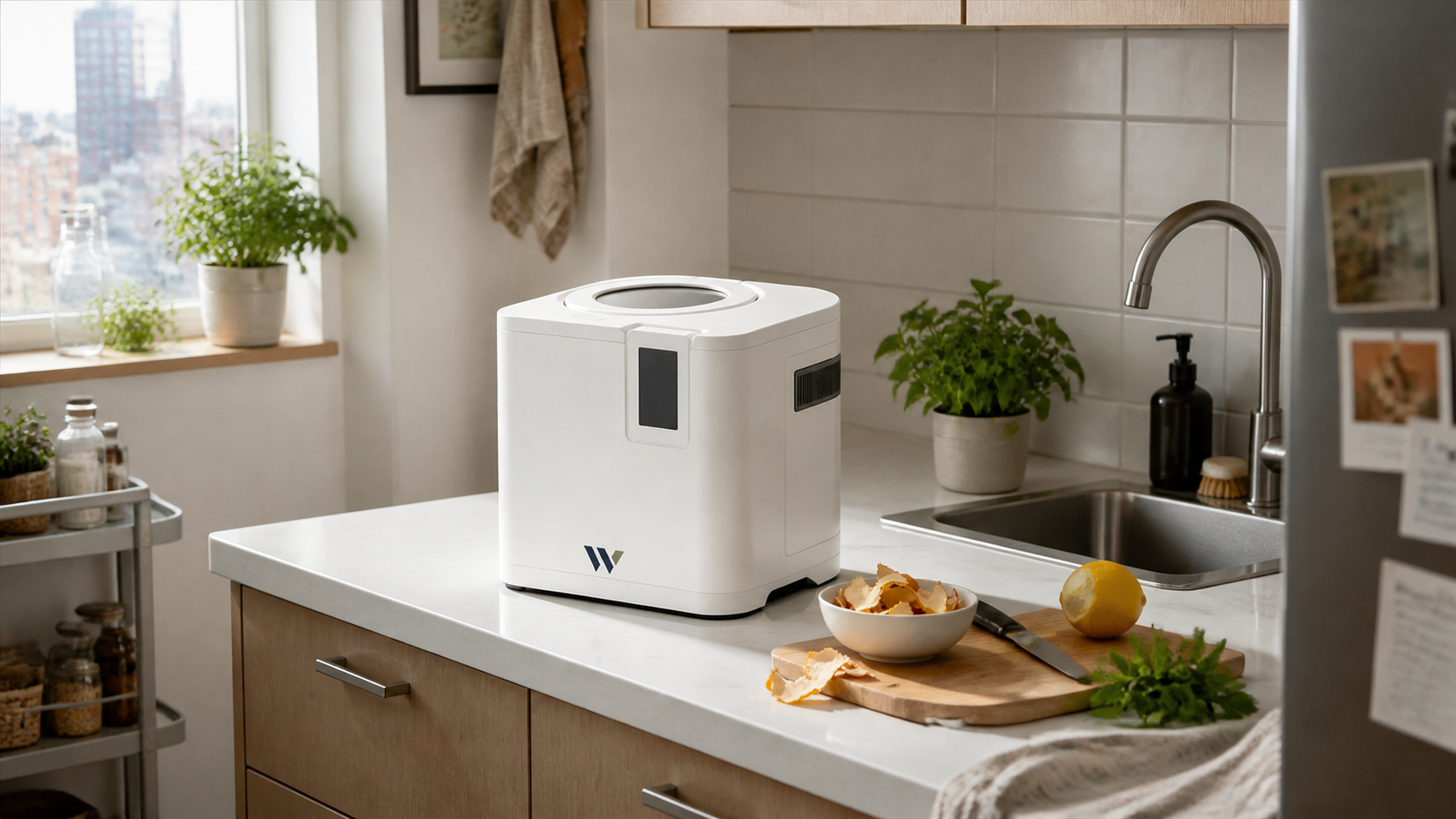
Indoor composting for apartment dwellers is about building a clean, repeatable routine. The photo above shows the Wawli Element 2 in that kind of compact setting. A compact appliance can help when outdoor space is unavailable, collection happens weekly or the freezer is full of mystery containers.
Before buying, decide where the output will go: a community compost site, municipal organics bin or further composting at home. Check acceptance rules first. The destination completes the plan.
Measure the counter space and route to an outlet. Consider how often you cook, scrap volume and whether the bucket is comfortable to clean. Apartment composting works best when the routine fits the kitchen, not when the kitchen negotiates with a new appliance every Tuesday.
Odor, noise, capacity and cleaning
Four practical checks separate a useful countertop composter from an expensive object that guards the toaster:
- Odor: Look at the sealing and filtration method, replacement schedule and filter cost.
- Noise: Ask when the grinding or mixing stage runs and whether it suits your household hours.
- Capacity: Compare usable batch capacity with the amount of scraps you actually generate, not the heroic week when twelve people came for dinner.
- Cleaning: Check which parts are removable, washable and likely to meet tomato sauce.
Also review cycle time, energy use, ventilation, warranty terms and replacement parts. A low price loses charm if filters are hard to find or the bucket starts a wrestling match at the sink.
How to choose the right kitchen counter composter
Record one week of scraps: approximate volume, common foods and how often the bin becomes unpleasant. Compare machines against that real list.
Ask each supplier five direct questions:
- Which foods are accepted, limited or prohibited?
- What exactly is the output after a normal cycle?
- What approved destinations are recommended for that output?
- What routine cleaning and consumables are required?
- Which capacity fits the household’s typical daily use?
If a household unit cannot keep up, stop searching for a larger countertop. Professional kitchens may need a commercial composting machine, food-waste reducer or another site-scale process. Feedstock, operating hours, utilities and the output destination matter alongside capacity.
Related Wawli equipment for higher daily loads
Capacity is a starting point, not a complete equipment recommendation. Confirm the food-waste mix, available footprint, utilities, workflow and downstream plan before selecting a model.
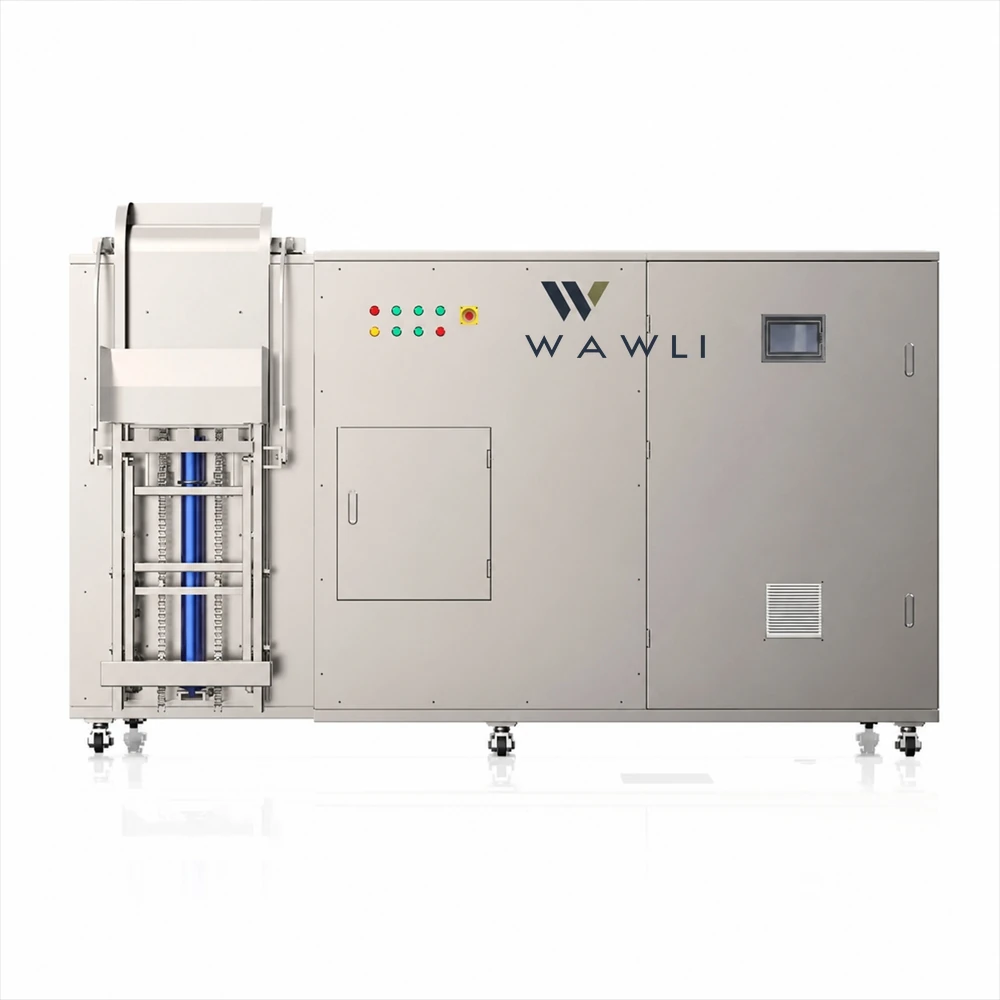
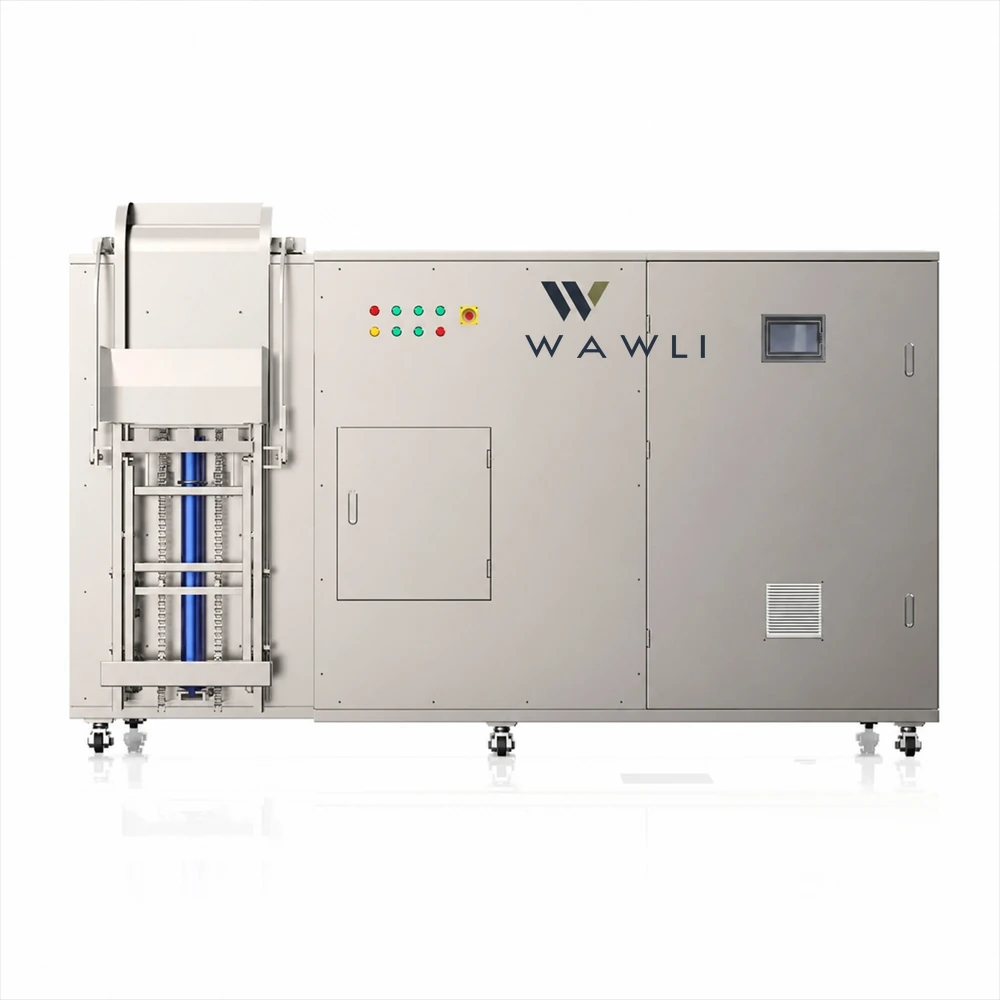
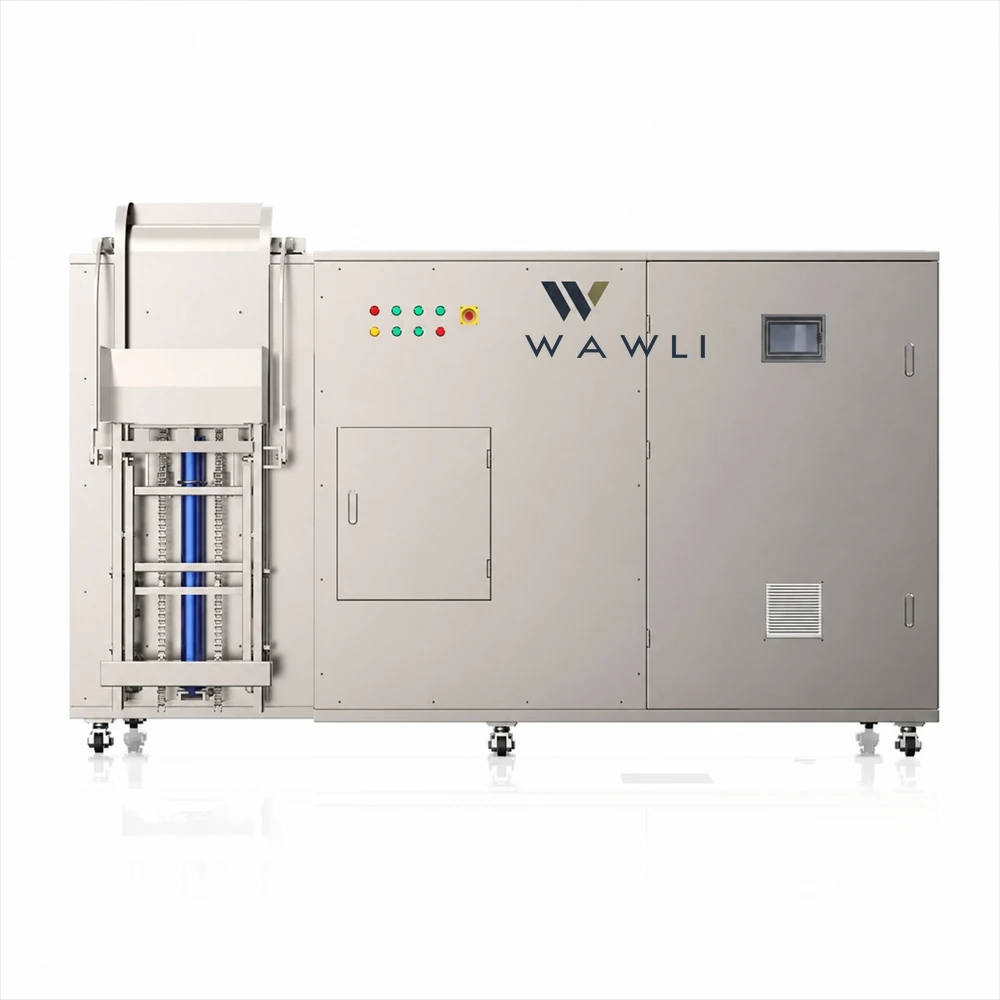
For medium businesses: 5 to 100 kg/day
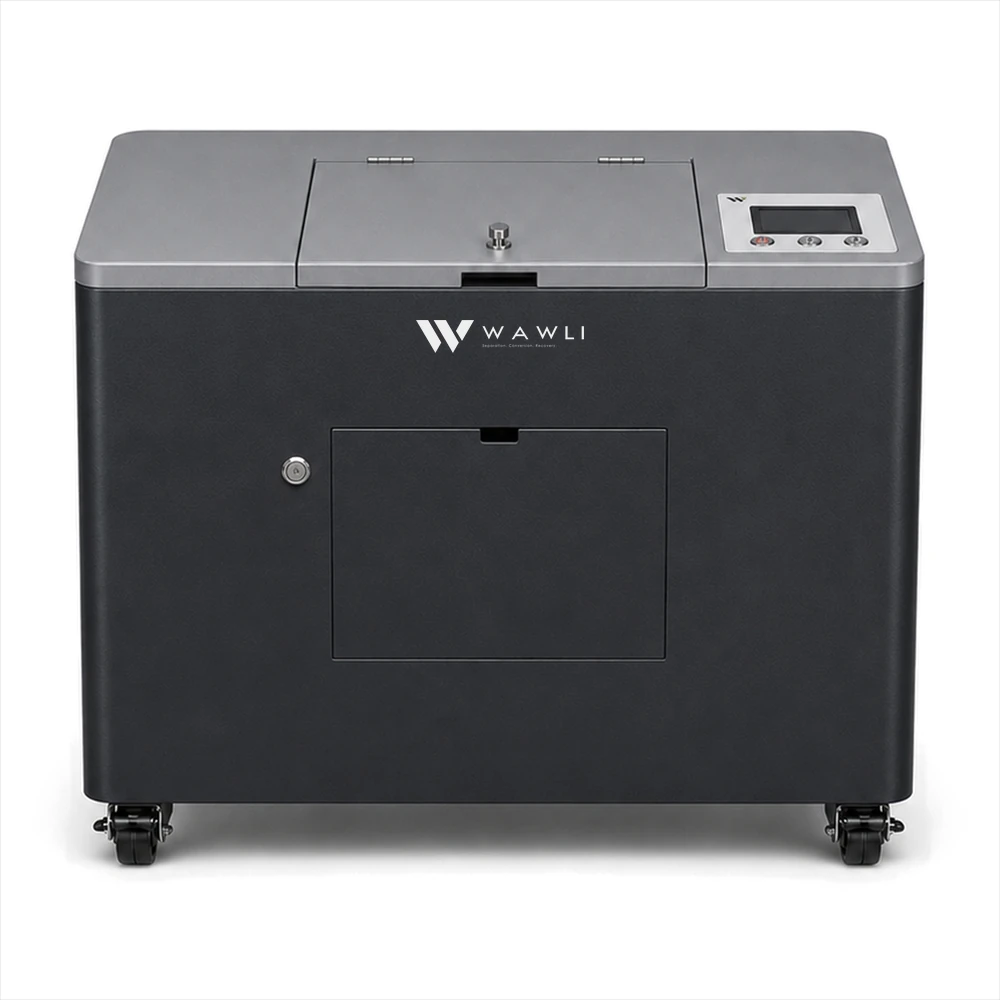
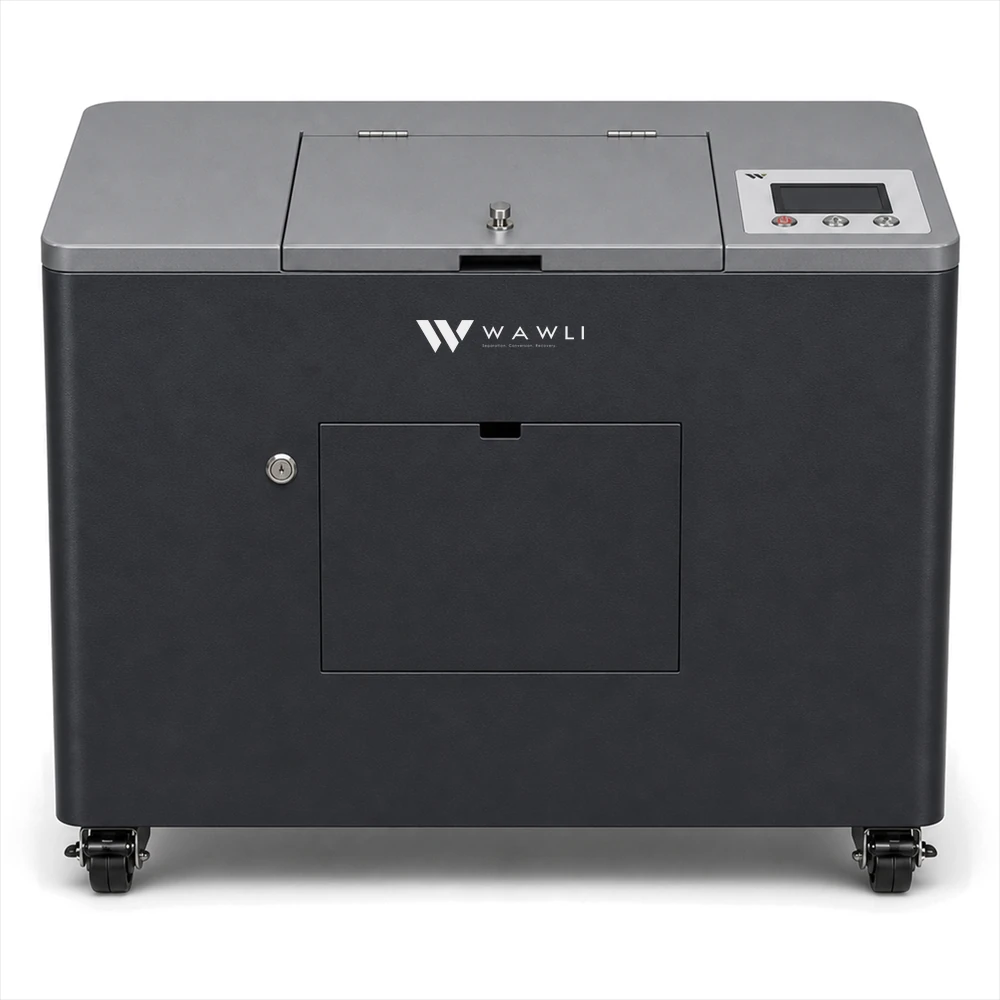
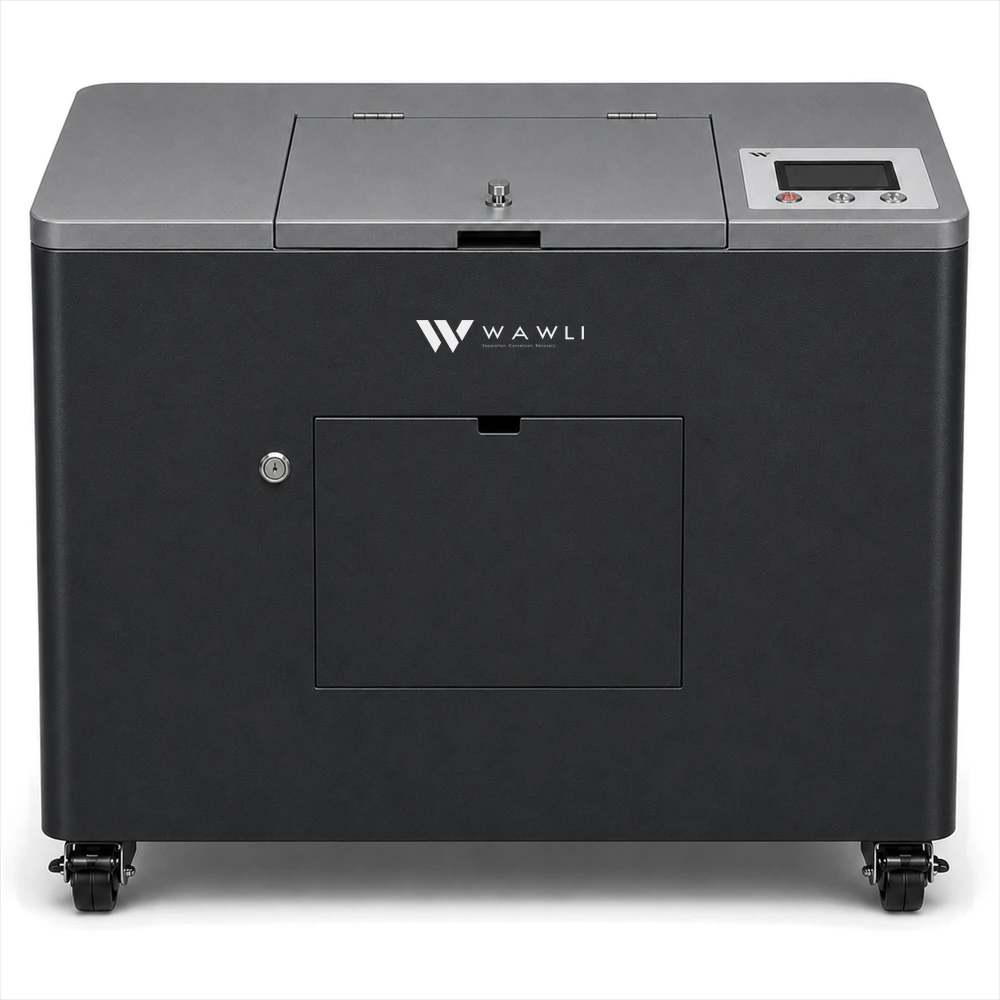
For large enterprises: 200 to 1,000 kg/day
The useful answer is usually the precise one
A countertop composter can make indoor food-scrap handling easier. It can reduce wet volume, support a cleaner routine and prepare material for a next step. What it should not do is blur the meaning of compost.
Choose the device by process, accepted inputs, output route and maintenance, not by whichever product page uses the most enthusiastic shade of green. The best kitchen routine is the one you can repeat after a long day, when the carrot peels are real and your patience is not.