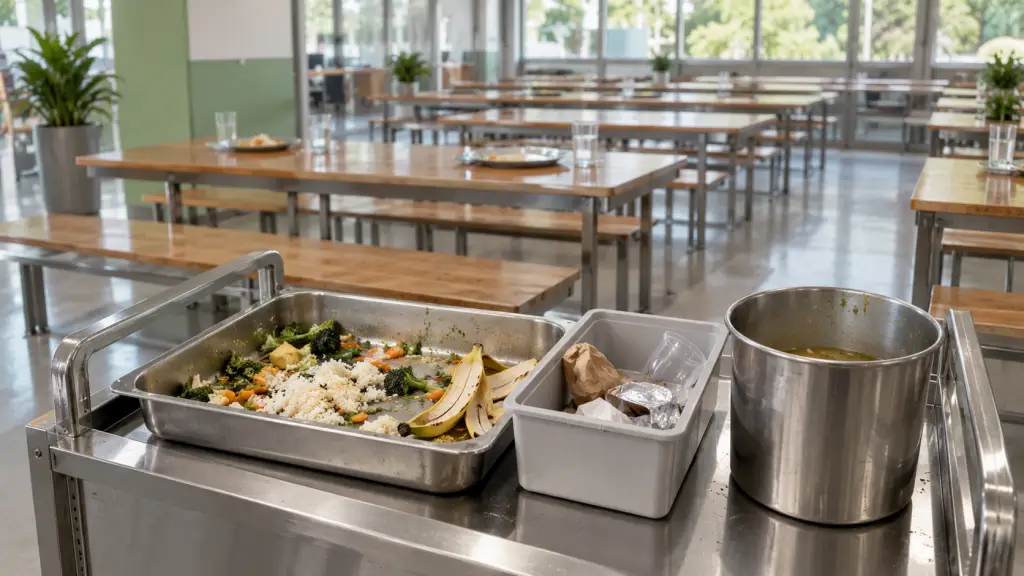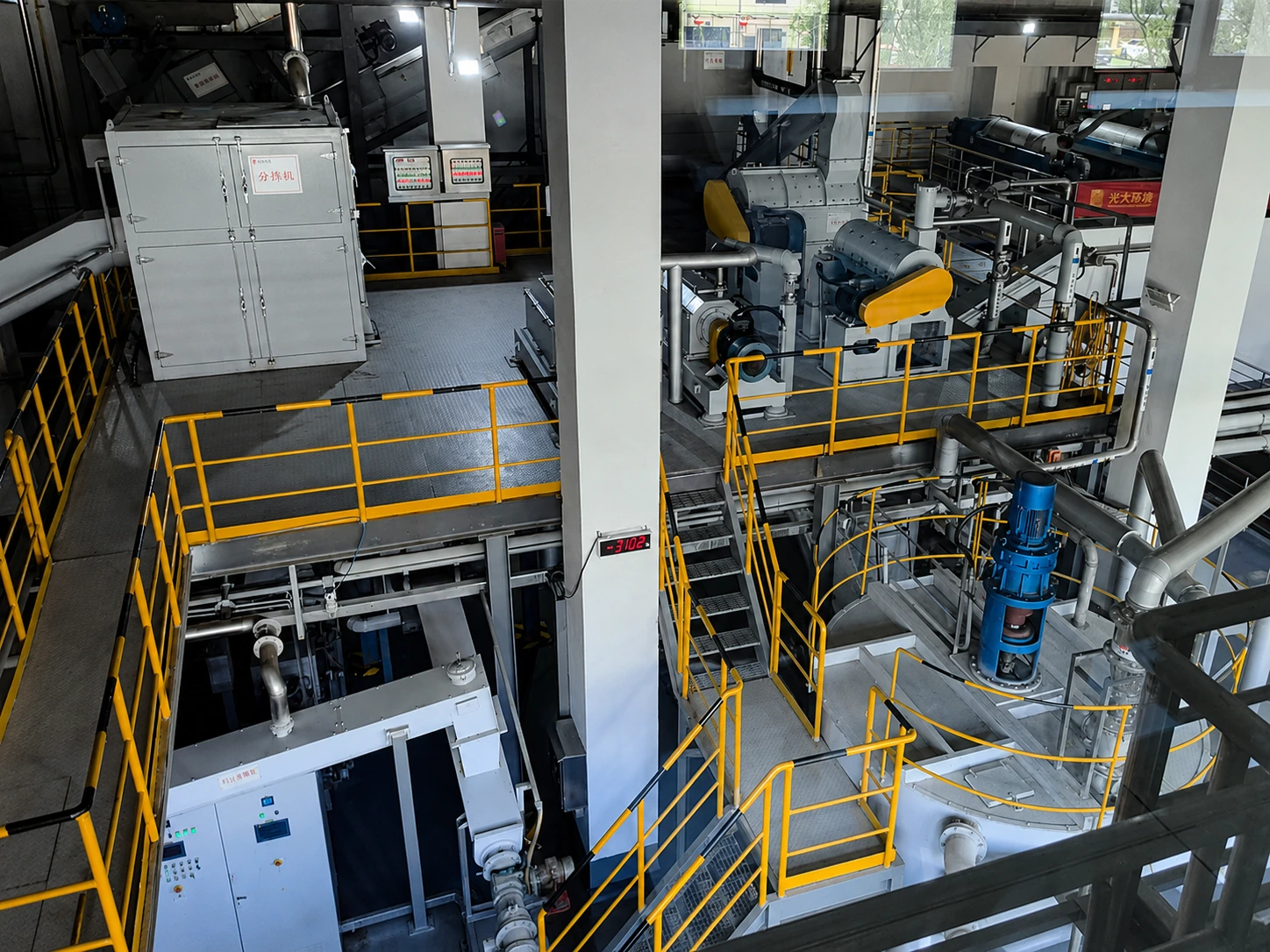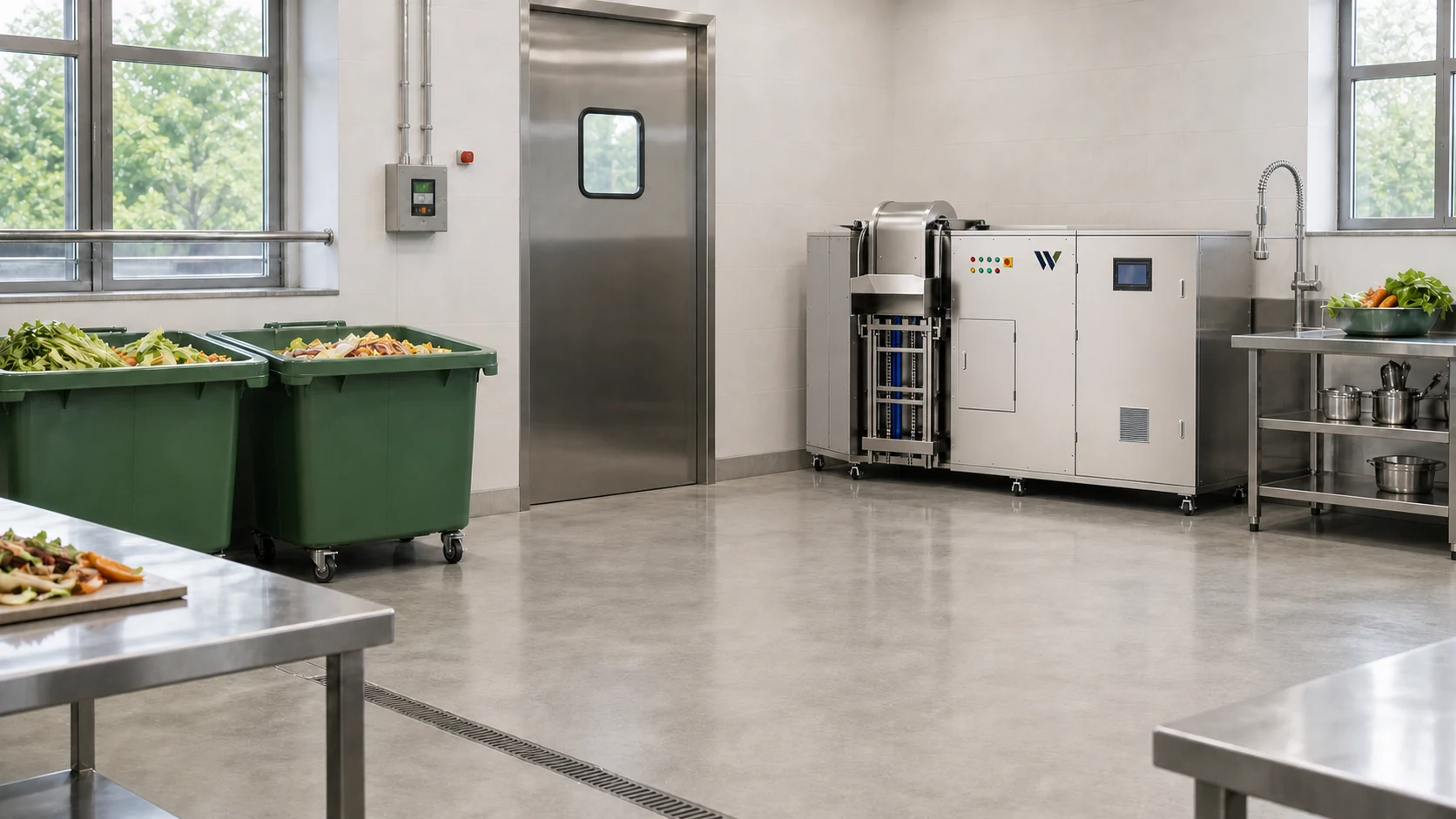
A bin is useful, but it is not a magic portal. Once food scraps disappear through the kitchen door, someone still has to collect, transport, treat and use what remains. Good food waste recycling starts long before a machine is switched on.
The scale is hard to ignore. The UNEP Food Waste Index Report 2024 estimates that 1.05 billion tonnes of food waste were generated in 2022, equal to almost one fifth of the food available to consumers. Households accounted for most of it, but food service and retail also produced a substantial share. For restaurants, hotels, schools, markets and food factories, that turns a global statistic into a daily operational problem: wet, heavy material keeps arriving, whether the waste plan is ready or not.
So what does better handling look like? It begins with four practical questions about separation, collection, treatment and equipment size.
How can you manage food waste more effectively?
The short answer is to separate it correctly, measure how much is produced and match the treatment route to the site.
Source separation is still necessary, even where incineration or centralized waste services are widely available. Food scraps behave differently from glass, metal, ceramics and plastic packaging. Mixing them together makes recovery harder and can leave a treatment operator sorting through yesterday’s lunch with the least useful pair of tongs imaginable.
A composter can process food scraps. It cannot politely ask a stainless steel fork to leave.
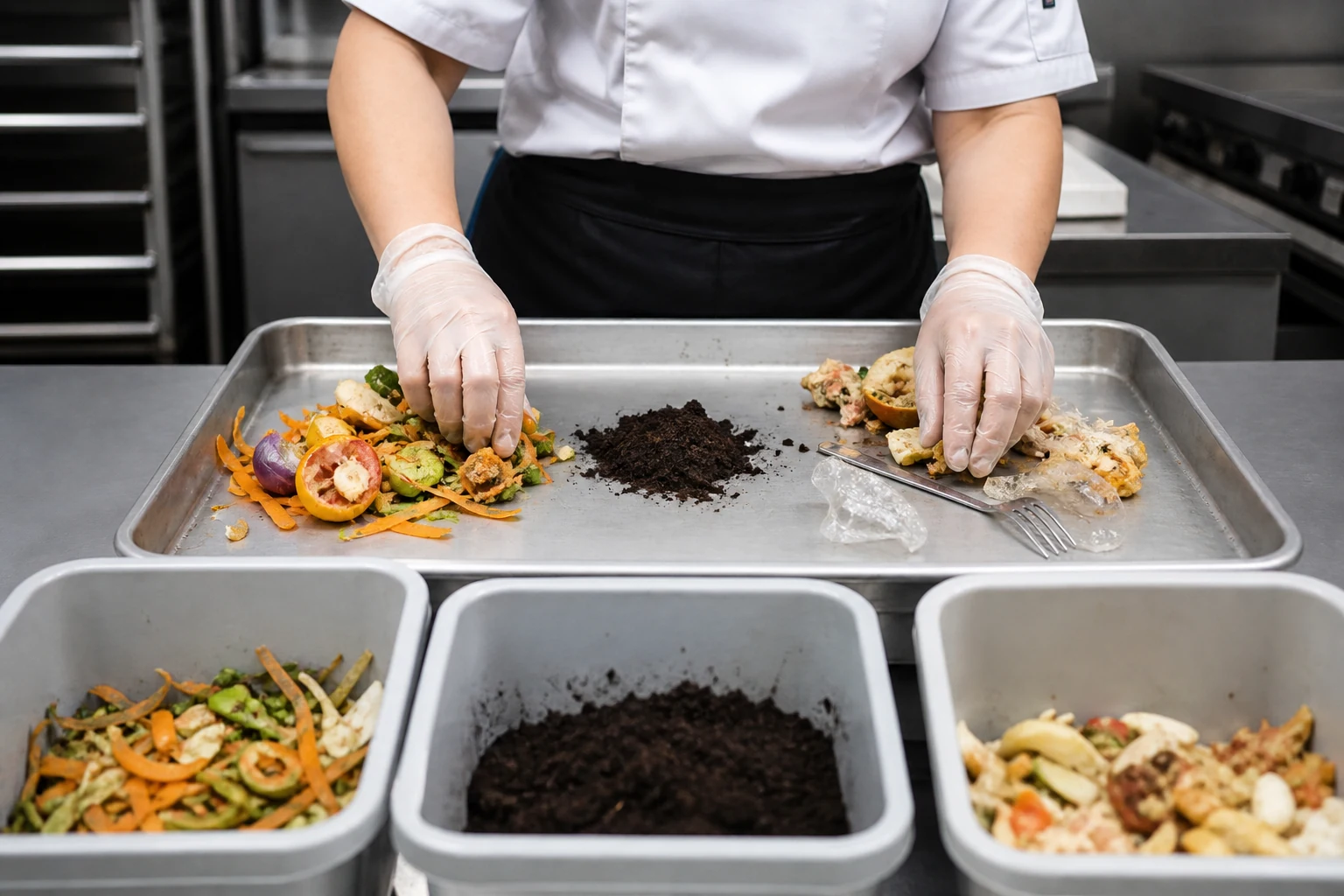
Clear bins and signs help, but the system also needs to work during a busy lunch service. Put collection containers close to the point of preparation. Decide who checks contamination. Record the weight or volume at a consistent time. Train new staff before they discover the process by accident. If the waste station is inconvenient, the general waste bin will win the argument surprisingly often.
Measurement matters because purchasing decisions based on guesswork tend to age badly. A hotel might produce a manageable amount on weekdays and twice as much after a banquet. A market may have a sharp weekend peak. A food factory may generate one consistent stream that is easier to plan around, but only if someone has recorded it.
The U.S. EPA Wasted Food Scale also puts prevention ahead of treatment. Edible surplus should not become compost simply because the compost bin is nearby. Better forecasting, storage and portion control can reduce waste before it exists. Donation and upcycling may keep suitable food in productive use. Treatment is for the unavoidable material that remains.
Is on-site composting better than centralized collection?
On-site composting is practical when a site produces a steady, suitable stream of food scraps and has the space, staff and downstream use needed to operate the process properly. Centralized collection can be the better choice when a local service already accepts the material and the site cannot support treatment operations.
Transport is part of the calculation. Food waste contains a lot of water, so frequent collection can mean moving considerable weight from a kitchen to a transfer station and then to a processing facility. On-site treatment can reduce dependence on that journey, but only when the site can manage contamination, storage, cleaning and the resulting material.
Centralized systems have their own strengths. They can combine material from many generators, use larger infrastructure and employ specialist operators. They may also accept a wider mix of feedstocks than a small system. The catch is coordination. If the front end separates food scraps but the collection service mixes them back into general waste, staff will notice. Nothing drains enthusiasm quite like watching careful sorting disappear into one truck.
Before choosing either route, map the complete movement of the material. Where is it produced? How does it reach the storage area? How often is it collected or processed? Who responds when the input is contaminated? Where does the output go?
A new machine cannot fix an old operating plan by looking expensive.
Aerobic composting vs anaerobic digestion: Which fits your site?
Aerobic composting uses microorganisms to break down organic material in the presence of oxygen. It requires control of feedstock balance, moisture, oxygen, particle size and temperature. When the process is complete, it produces biologically stable compost.
Anaerobic digestion works without oxygen. Microorganisms break down organic material inside a closed system, producing biogas and a wet material called digestate. The biogas can be used as an energy source. The digestate still needs a suitable management or beneficial-use route, and it may receive further treatment before land application.
Neither route wins by default.
Anaerobic digestion can make sense where there is enough feedstock, infrastructure and demand for biogas use. Aerobic composting can suit local or distributed settings where the operator wants to turn suitable organics into a stable soil amendment. Permitting, land, energy, labor and output markets can change the answer from one site to the next.
There is another distinction worth keeping clear. Grinding, dehydrating or liquefying food scraps is not automatically composting. The EPA defines compost as a biologically stable soil amendment created through managed aerobic decomposition. A dryer or grinder may be useful as pre-processing equipment, but changing the texture of a potato peel does not complete a biological process. Calling every reduced material “compost” is a little like calling every meeting “productive.” Optimistic, perhaps. Accurate, not always.
What size food waste composting equipment does your site need?
Start with measured waste volume, not with the largest machine that fits in the brochure photo.
Record at least a few representative weeks, including busy days. Separate avoidable edible waste from unavoidable preparation scraps. Note the materials that appear most often and identify contamination. Then check the practical limits of the site: loading access, power, ventilation, drainage, cleaning, staffing, noise requirements and space for both incoming material and output.
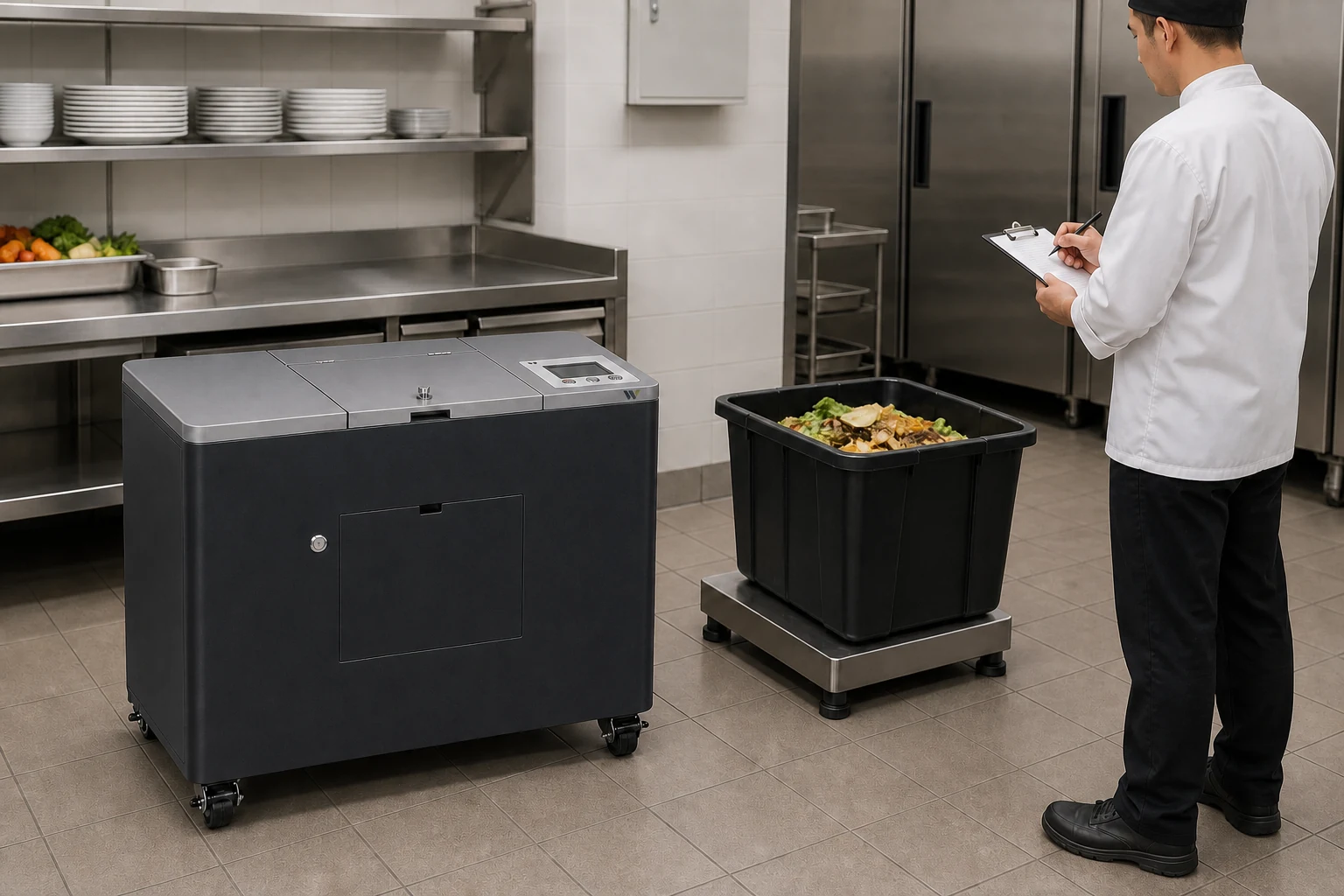
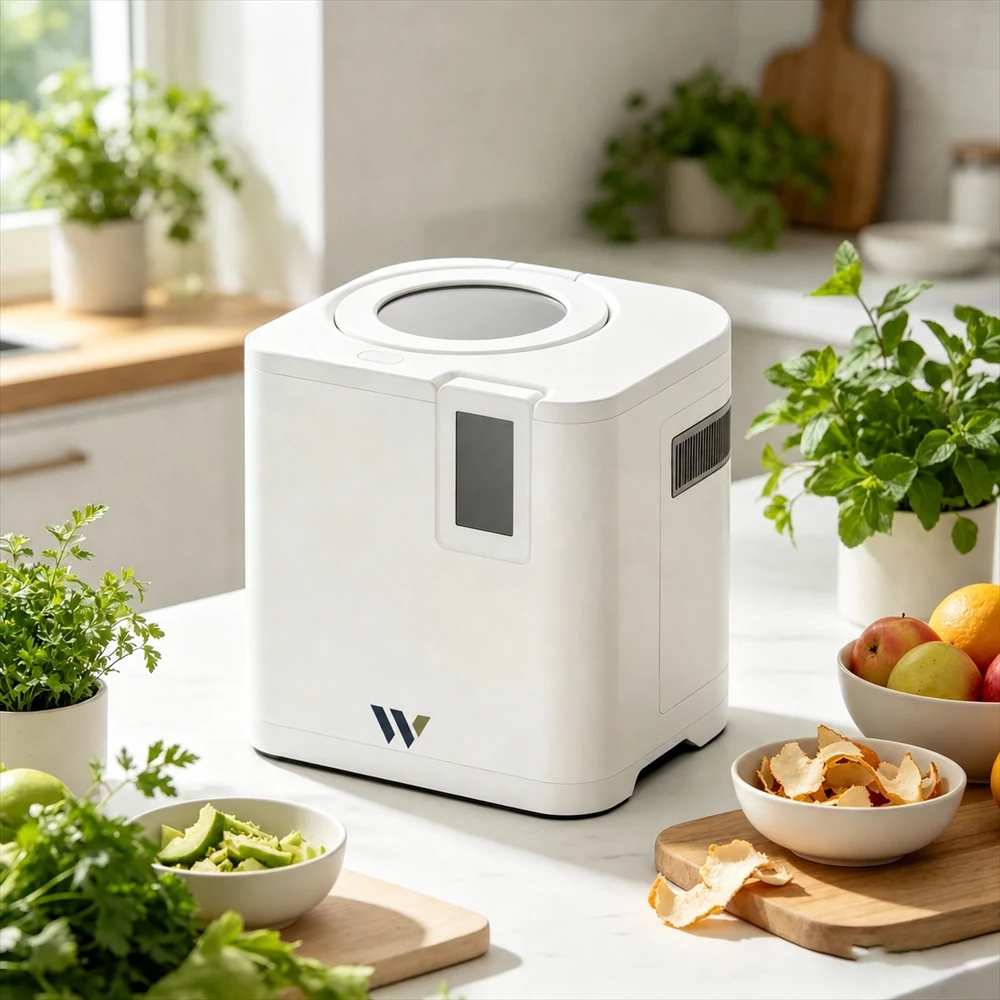
Wawli groups its WL-series product types into four reference capacity bands:
- Household Composter: under 5 kg
- Commercial Composter: 5 to 100 kg
- Industrial Composter: 200 to 1,000 kg
- Large-scale Industrial Composter: 2,000 to 5,000 kg
These bands help organize the range, but they are not a substitute for checking a specific model’s capacity unit and operating basis. Chamber volume, capacity per cycle and daily throughput are different measurements. A neat-looking number can cause a messy purchasing decision if the unit beside it is ignored.
Is a Household Composter enough for a small kitchen?
Household Composters are the sensible place to start for homes and other small kitchens with limited, predictable food scraps. The main questions are what materials the unit accepts, how often it must run, where it will sit and what happens to the output.
When does a Commercial Composter make sense?
Commercial Composters are intended for recurring loads from restaurants, hotels, schools, markets and similar sites. Average daily volume matters, but the busiest service period matters too. Staff need a realistic loading routine and a plan for contamination, cleaning and output storage.
Do you need an Industrial Composter for high-volume food waste?
Industrial Composters suit larger, more consistent inputs from campuses, food processors and other high-volume operations. At this scale, equipment selection becomes part of a wider system that may include pre-sorting, storage, loading, odor control, maintenance and material handling. Large-scale Industrial Composters extend that planning to still larger projects. The machine is important. The process around it is what keeps the machine useful.
Better food waste management is not a choice between “throw it away” and “buy equipment.” Prevention comes first. Unavoidable scraps need clean separation. The collection or treatment route has to fit the location, and the output needs somewhere useful to go.
That may sound less magical than dropping everything into one bin. It is also much more likely to work.
Still deciding which system fits your waste volume? Explore Wawli’s composting products or review food waste equipment for household, commercial and industrial settings.