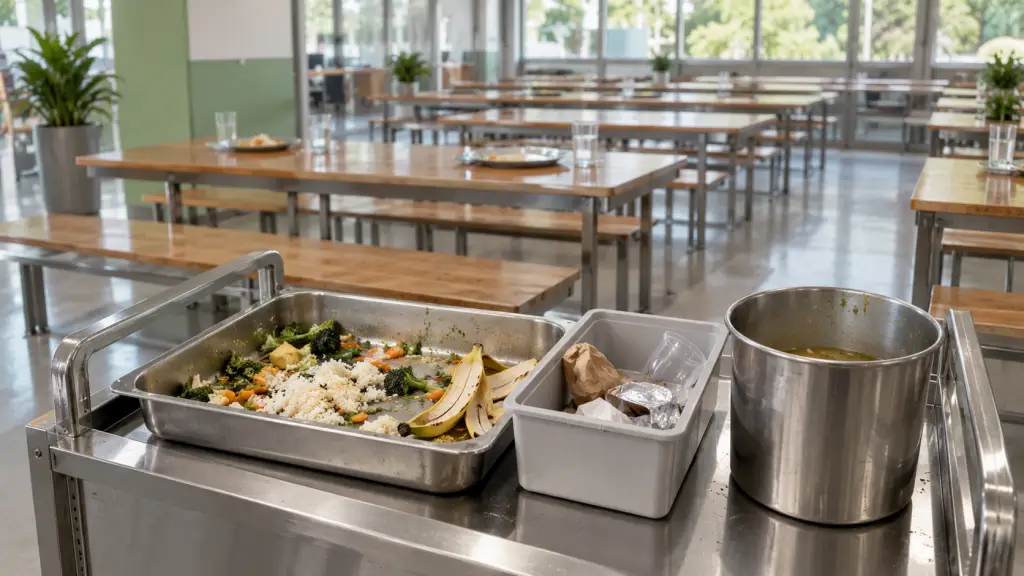
A bin with a lid can hide yesterday’s risotto. It cannot fix over-ordering, oversized portions, poor sorting or a collection schedule that leaves wet scraps sitting around for two days.
That is why food waste management has to begin before disposal. For restaurants, hotels, canteens, schools and food factories, the practical job is to prevent avoidable waste, separate what remains and choose a treatment route that fits the site’s actual volume.
The scale of the problem is not small. The UN Environment Programme estimated that 1.05 billion tonnes of food waste were generated in 2022. Food service accounted for 28 percent of that total. UNEP also estimates that food loss and waste contribute 8 to 10 percent of annual global greenhouse gas emissions.
Why does food waste management matter in a commercial kitchen?
Food waste affects more than the waste invoice. It uses staff time, storage space and cleaning capacity. It can also create odor, pest and hygiene problems when wet organic material stays in the kitchen or loading area for too long.
The financial leak often starts much earlier. A tray of untouched rice represents more than disposal weight. It also includes the purchase price, refrigeration, preparation time and energy used to cook it. Good restaurant food waste management makes those losses visible while there is still time to change them.
This is why the first question should not be, “Which machine do we buy?” It should be, “What are we throwing away, where is it coming from, and which part could have been prevented?”
How can businesses reduce food waste before it reaches the bin?
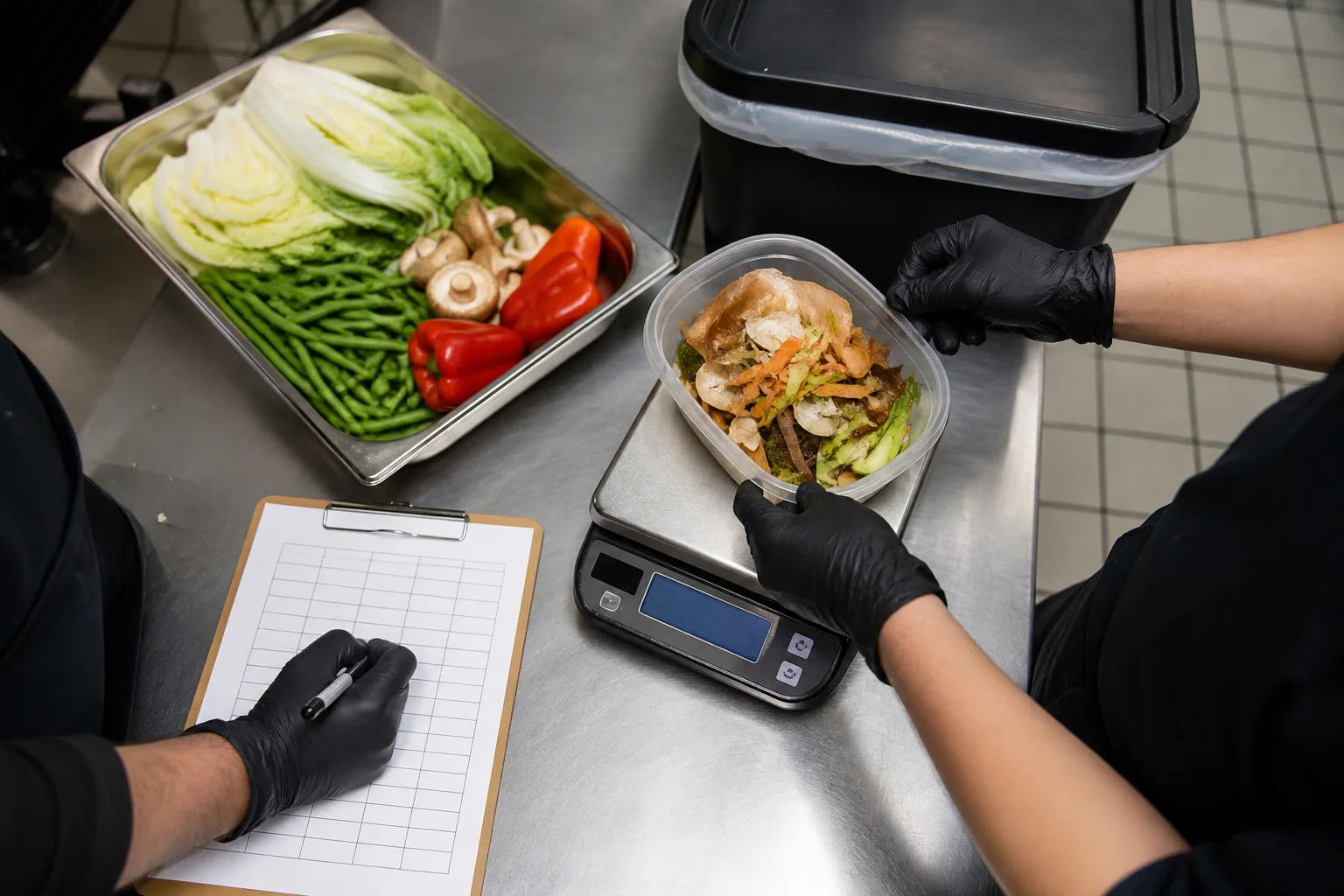
Measure a normal operating week
Record food waste by source, not as one anonymous total. Separate preparation trimmings, spoiled inventory, buffet returns and plate waste. Weigh each stream at the same time every day and note the number of meals served. A simple spreadsheet is enough.
The aim is not a perfect scientific study. It is to spot patterns. If plate waste jumps every Friday, portion size or menu design may be the problem. If spoiled produce dominates on delivery day, purchasing or storage needs attention.
Fix the kitchen decisions that create repeat waste
Use the audit to adjust order quantities, batch cooking, prep methods and serving sizes. Track the changes for another week. Prevention usually costs less than processing because the food never becomes waste in the first place.
Keep edible surplus in the food system
Safe, untouched surplus may be suitable for redistribution, donation or another approved use, depending on local food-safety rules. The US EPA’s Wasted Food Scale places prevention, donation and upcycling above treatment and disposal. A composting system should handle unavoidable organic material, not food that could still feed people.
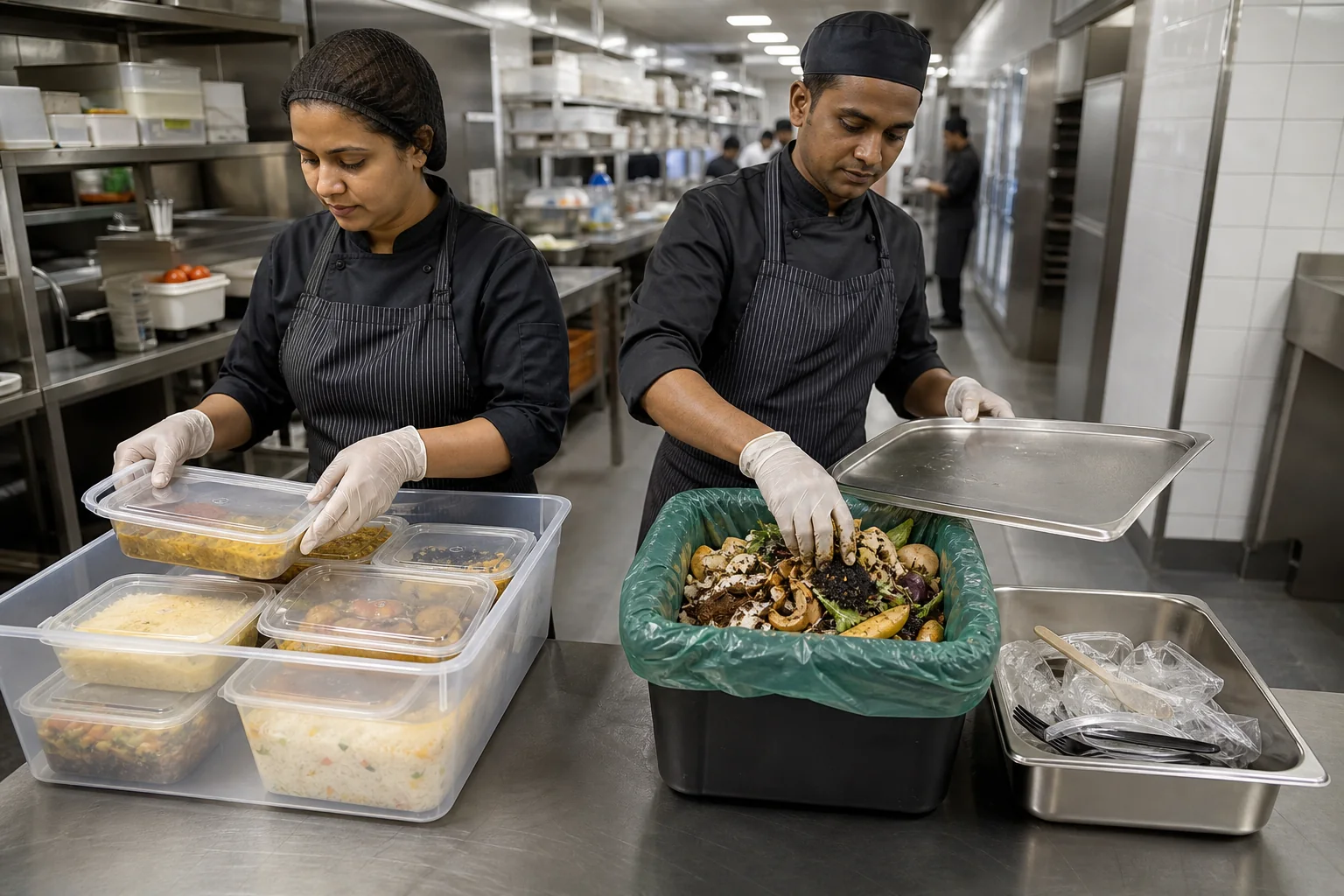
What should be separated before food waste processing?
A clear sorting station is the hinge between a tidy plan and a very expensive bin. Staff need to see where each item goes without stopping to decode a poster during the lunch rush.
- Edible surplus: safe food that can be reused, redistributed or donated under local rules.
- Unavoidable organic waste: peels, coffee grounds and other materials suitable for the chosen process; bones and shells only where the specific system explicitly accepts them.
- Contaminants: plastic film, cutlery, glass, metal and packaging that can damage equipment or reduce output quality.
Place containers at the point of generation, use consistent labels and give each shift the same instructions. Management still needs to check the stream. Even good signage cannot stop a teaspoon from taking an adventurous trip into the organics bin.
When does commercial composting make sense?
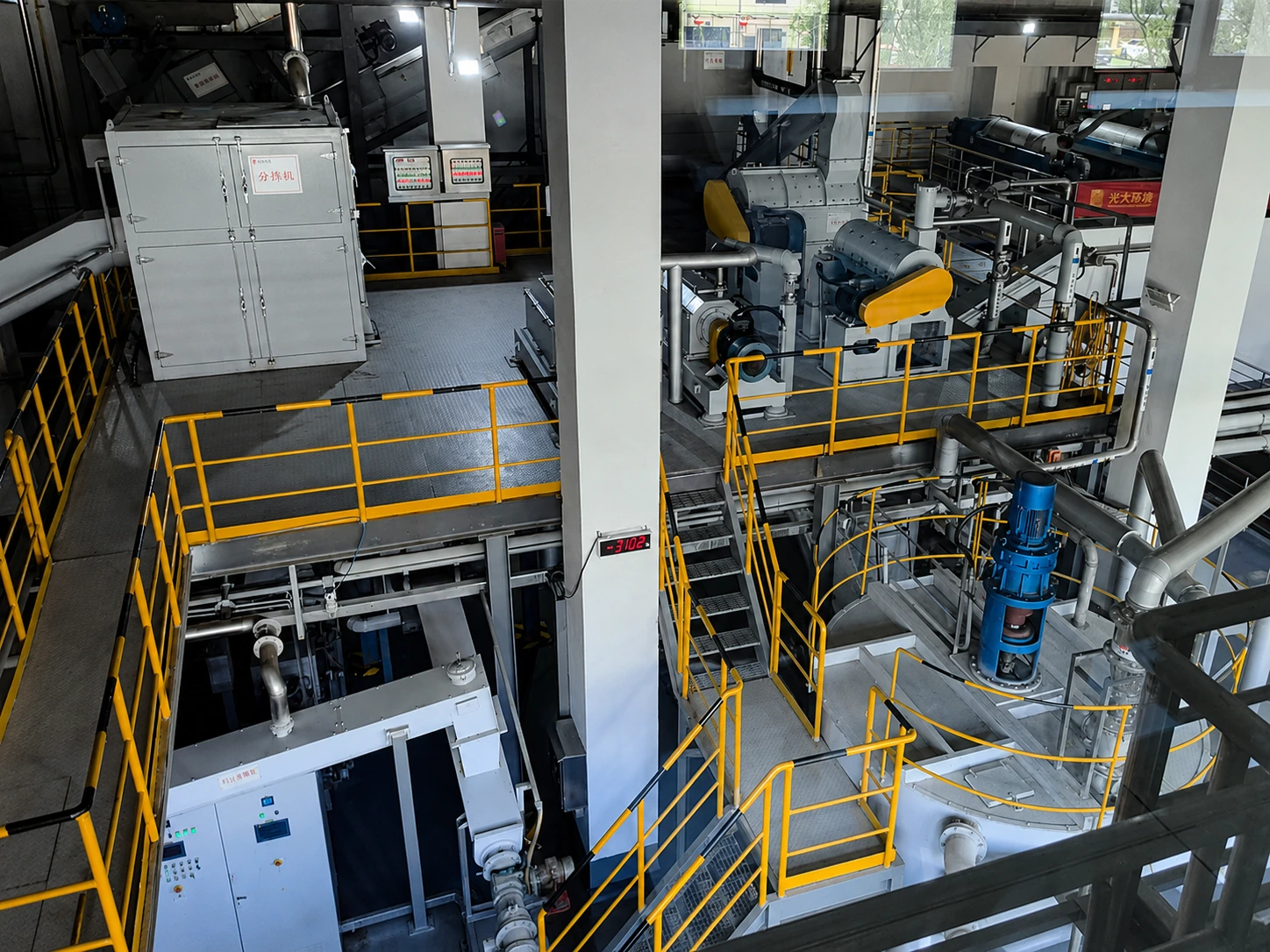
Commercial composting becomes relevant after avoidable waste has been reduced and unavoidable organics are separated cleanly. On-site processing can suit facilities that generate a steady volume, have enough operating space and want to reduce reliance on frequent collection of wet waste.
Before comparing composting equipment, measure average and peak daily volume. Then check the accepted feedstock, contamination rate, loading pattern, ventilation, drainage, power supply, staff access and the intended use or removal route for the processed material. Local rules may govern storage, operation and the use of any output.
Small restaurants and offices have different needs from hotels, central kitchens, supermarkets or food factories. A machine sized for the average day may struggle during peak production. An oversized system may waste space and capital. The correct size follows the waste audit, not the other way around.
What does a food waste composter change day to day?
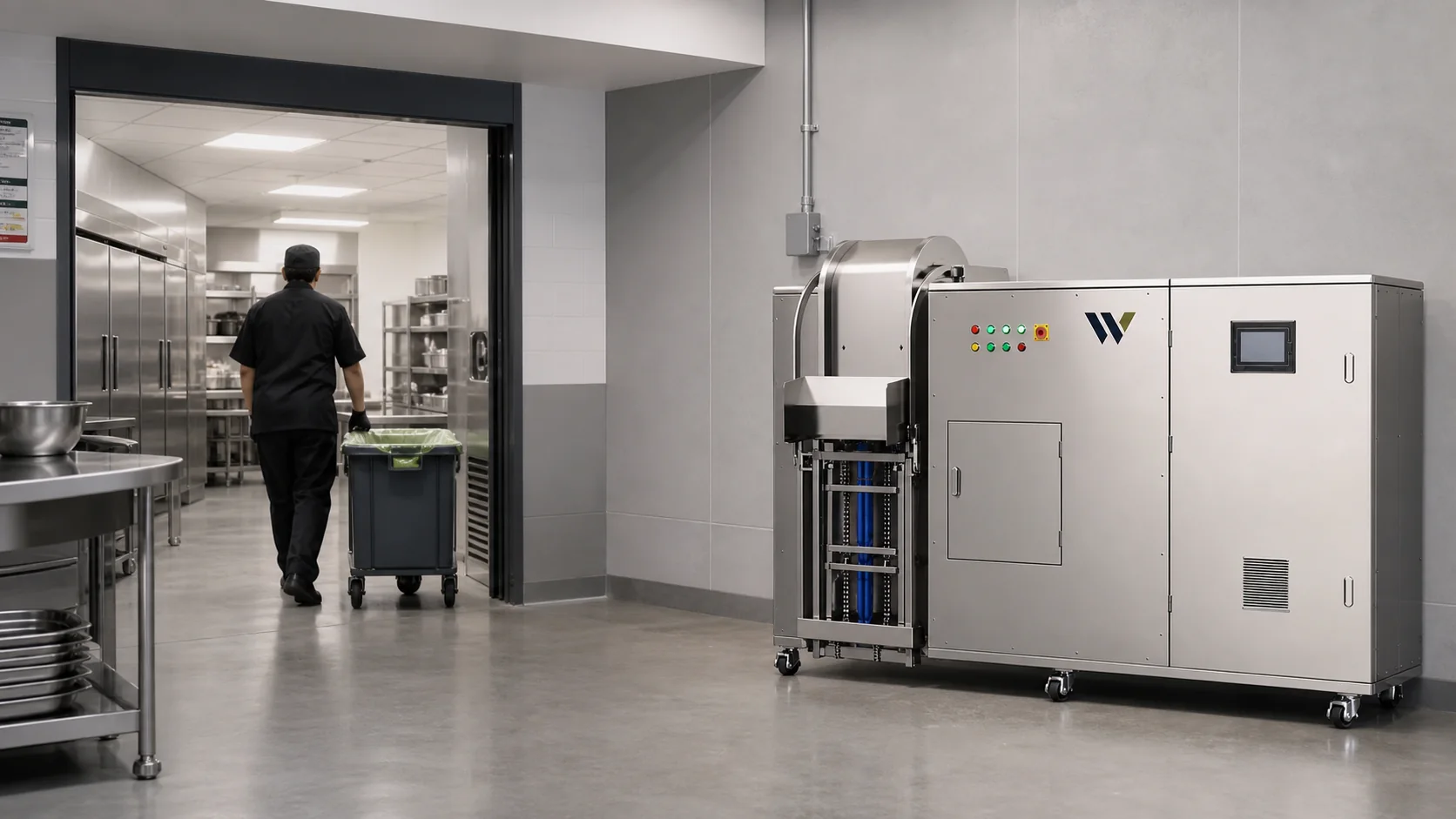
A food waste composter is part of the workflow, not a substitute for one. Staff still need clear input rules, routine checks and a plan for the processed material. When those basics are in place, moving treatment closer to the source can make handling more predictable.
- Wet organic scraps spend less time waiting in general-waste bins.
- Kitchen and facilities teams have a defined loading and cleaning routine.
- Daily input records create useful data for purchasing and waste reduction.
- Unavoidable organics can follow a recovery route instead of default disposal, subject to local requirements.
Results depend on the waste stream, site conditions and how the equipment is operated. Claims such as “zero odor,” “no labor” or “maintenance free” should make any facilities manager raise an eyebrow. Real equipment lives in a real kitchen. It needs trained people and a sensible operating plan.
Which Wawli system fits your waste volume and site?
Wawli organizes its food waste composting equipment around practical capacity bands. The figures below are reference processing capacities, not a substitute for a site assessment.
| Typical volume band | Wawli product type | Where to start |
|---|---|---|
| Under 5 kg | Household Composter | Household Composters |
| 5 to 100 kg | Commercial Composter | Commercial Composters |
| 200 to 1,000 kg | Industrial Composter | Industrial Composters |
| 2,000 to 5,000 kg | Large-scale Industrial Composter | Large-scale systems |
Capacity figures are for initial comparison only. Confirm whether a specific model’s limit is per batch or per day, together with feedstock and installation requirements. For microbial treatment systems, discharged material may require further curing or treatment and testing before soil use; a processing cycle does not establish compost maturity.
Compact Wawli Element systems suit very low-volume settings. The Wawli Vector range covers commercial applications, while Matrix and Atlas systems address industrial and large-scale processing. Browse the complete Wawli composting product range or review common food waste equipment before discussing a specific model.
How do you build a food waste management plan that survives a busy Friday?
- Run a seven-day audit and separate waste by source.
- Prevent repeat waste through purchasing, storage, menu and portion changes.
- Set a route for safe edible surplus.
- Create one simple sorting rule for unavoidable organics and contaminants.
- Measure average and peak daily organic waste volume.
- Compare collection, off-site treatment and on-site processing against site constraints and local rules.
- Train every shift, record inputs and review the data each month.
The best plan is not the one with the most arrows on a slide. It is the one that kitchen staff can follow at 8:15 p.m. when the dining room is full and nobody has time for a lecture.
If your audit shows a stable stream of unavoidable organic waste, Wawli can help match the site, volume and operating pattern to an appropriate system. For a closer look at treatment routes, read our guide to food waste recycling and better waste management.