Technology & Insights
Anaerobic Digestion of Food Waste vs Aerobic Composting
Both pathways keep organics out of disposal, but they are not interchangeable. One works without oxygen and recovers biogas; the other uses oxygen to produce stable compost.
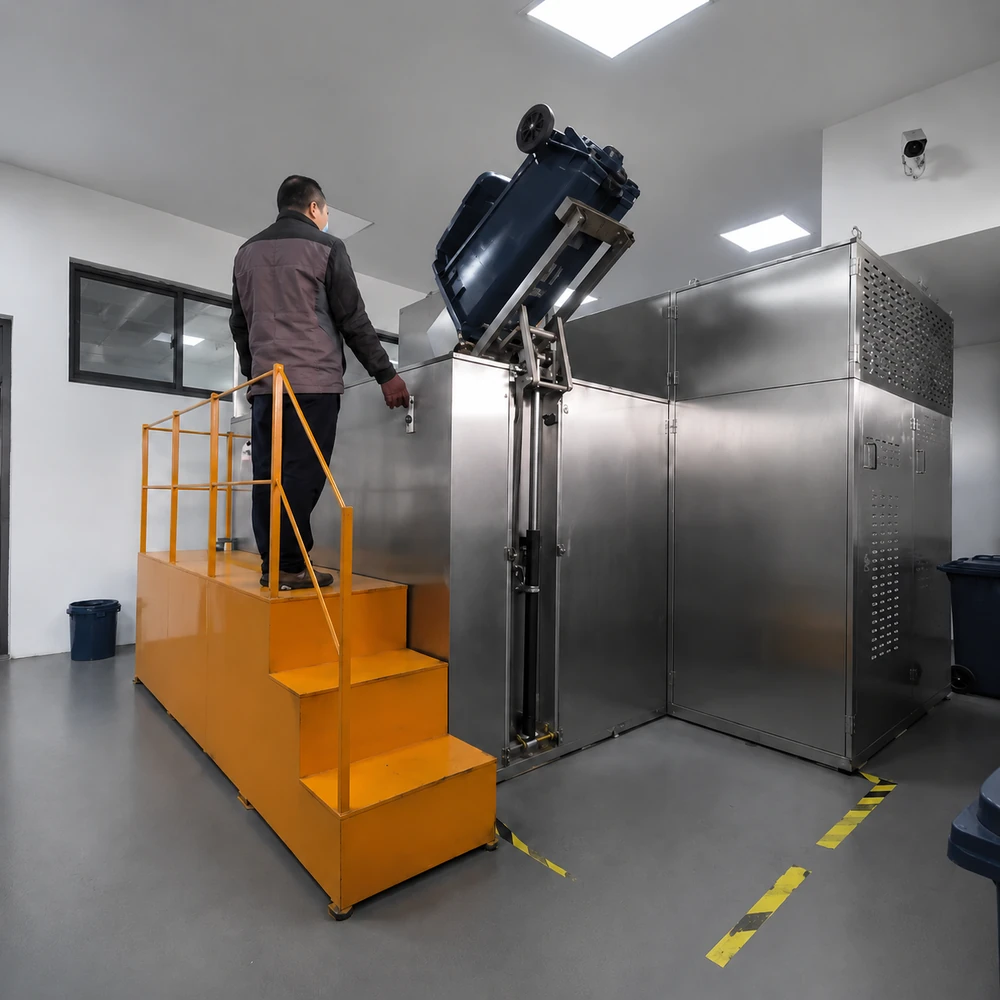
Bin-lifting equipment transferring organic waste into a treatment unit.
Both pathways keep organics out of disposal, but they are not interchangeable. One works without oxygen and recovers biogas; the other uses oxygen to produce stable compost.
The defining difference is oxygen
Anaerobic digestion of food waste uses microorganisms in the absence of oxygen. Aerobic composting deliberately supplies oxygen through porosity, turning or forced airflow.
That difference shapes the vessel, controls, emissions management and products. It is more useful than comparing technologies by cycle time alone.
Anaerobic digestion produces biogas and digestate
During digestion, organic matter is converted into biogas—primarily methane and carbon dioxide—and a residual digestate. Biogas can be used for heat, electricity or upgraded fuel where supporting equipment and markets exist.
Digestate still needs a management plan. Depending on feedstock, treatment and regulation, it may be separated, further stabilised, composted or applied in an approved beneficial use.
Aerobic composting produces a soil amendment
Composting converts mixed organics into a biologically stable material through managed aerobic decomposition. Bulking agents are often added to create structure and balance wet food waste.
The active stage is followed by curing and, where required, screening. The result is different from digestate and from dried or ground food scraps.
Feedstock and contamination affect both
Digesters often handle pumpable slurries and may accept fats, oils and grease, while dry systems can process higher-solids feedstocks. Composting recipes usually need structural carbon-rich material.
Plastic, glass, metal and persistent chemical contaminants create problems in both pathways. Depackaging and source separation are therefore design requirements, not optional housekeeping.
Energy recovery changes project economics
Anaerobic digestion adds gas handling, safety systems and energy-use decisions. A reliable use for biogas and a viable digestate outlet are central to the business case.
Composting generally has no biogas system, but requires land or vessels, aeration, curing space and a market or use for compost. Transport distance can materially affect both options.
Odour and emissions need active control
Neither pathway is odour-free. Digesters need sealed feedstock handling and gas integrity; composting needs clean receiving, correct recipes and adequate aeration.
A facility should define normal operating signals, alarm conditions and corrective actions before commissioning. Neighbour impact is an engineering and management issue.
Choose by the whole material pathway
Compare feedstock consistency, contamination, required capacity, energy demand, available land, permitting, operator skill and the destination of every output.
Hybrid projects are possible: digestion can recover energy first, followed by aerobic treatment of suitable residuals. Integration still needs a clear mass balance and quality plan.
Frequently asked questions
Is anaerobic digestion a type of composting?
No. EPA distinguishes the oxygen-free digestion process and its digestate from aerobic composting and finished compost.
Which process is faster?
Cycle time depends on system design and does not by itself indicate stability, sanitation or output quality.
Can the same food waste enter either process?
Sometimes, but acceptance depends on solids content, packaging, contamination, recipe needs and the facility’s permit.
Sources and further reading
Plan a controlled process
Match the system to your feedstock and site.
Review process technology, product formats and project requirements with Wawli.