Technology & Insights
What Food Waste Belongs in Compost? A Practical Feedstock Guide
A useful feedstock guide starts with the process, not a universal yes-or-no list. System scale, temperature, residence time and contamination controls determine what can be accepted safely.
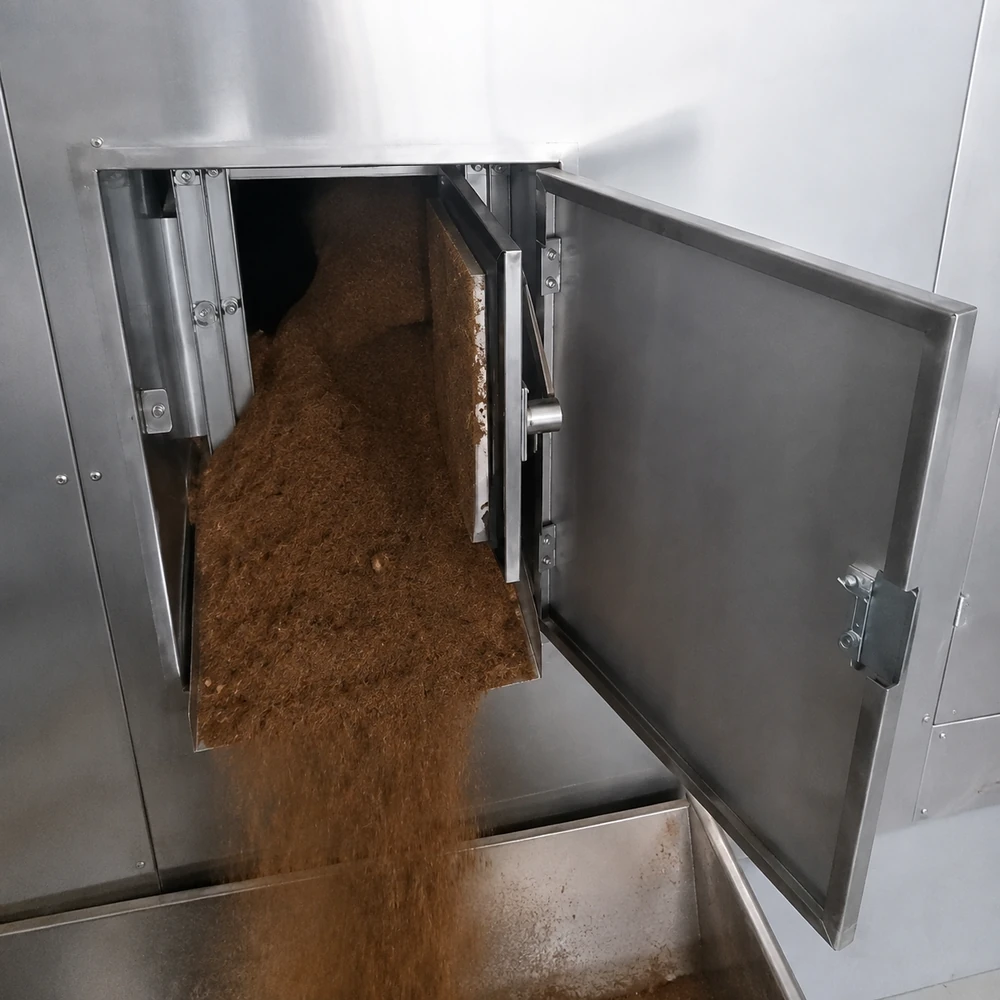
Processed organic material at the discharge point of a stainless-steel treatment unit.
A useful feedstock guide starts with the process, not a universal yes-or-no list. System scale, temperature, residence time and contamination controls determine what can be accepted safely.
Start with the system, not the ingredient
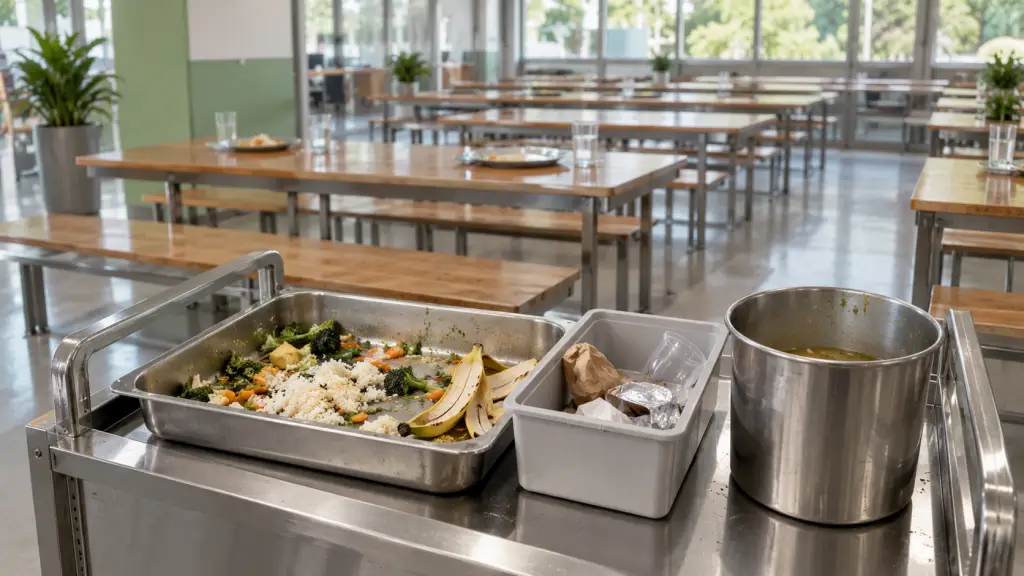
The phrase food waste in compost covers very different operating conditions. A small backyard pile, a community collection programme and an enclosed commercial system do not have the same temperature profile, pest controls or ability to handle fats and animal products.
Before changing an accepted-materials list, identify the actual destination. The facility operator’s rules take priority because they reflect local permits, equipment and the intended use of the finished material.
Common food scraps that are easier to manage
Fruit and vegetable trimmings, coffee grounds, paper coffee filters, crushed eggshells and plain plant-based leftovers are commonly accepted in suitable composting systems. They have different roles: paper filters provide carbon, while eggshells are mineral-rich and break down slowly. Chopping bulky food pieces increases exposed surface area and usually improves mixing.
These wet inputs need structure and carbon. Dry leaves, untreated wood fibre, shredded uncoated cardboard or another approved bulking agent help absorb moisture and preserve air spaces.
Inputs that need tighter controls
Meat, fish, bones, dairy, oils and rich cooked dishes can cause odour, pest and moisture problems in a backyard pile. Many home-composting guides recommend keeping meat, dairy, fats and oils out. Any allowance for small amounts of plain cooked plant-based food should follow the guidance for the specific system.
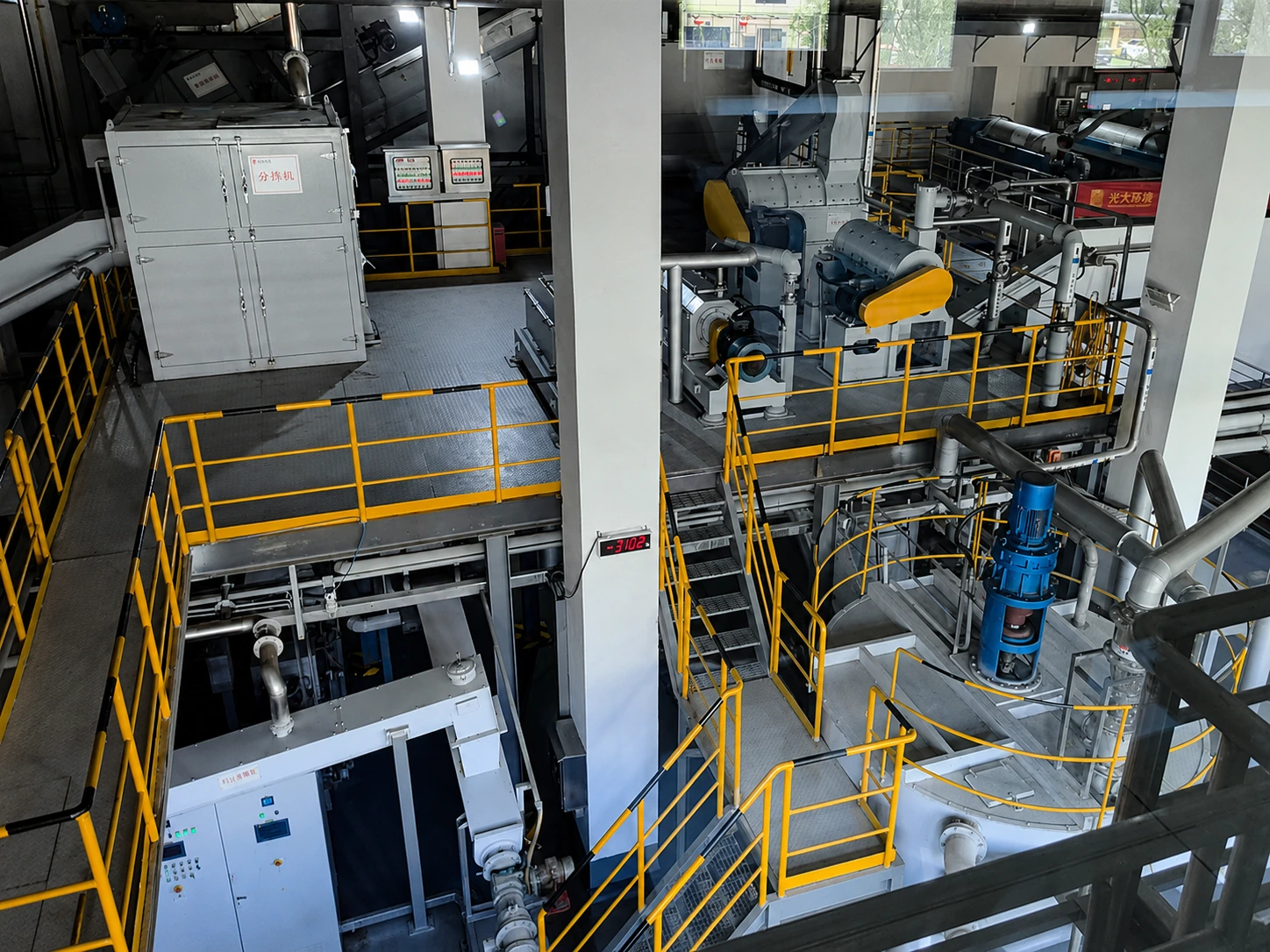
Commercial and enclosed systems may accept a wider range because they can use controlled aeration, mixing, temperature management and defined sanitation procedures. Acceptance is still facility-specific.
Contamination matters more than it looks
Produce stickers, plastic film, cutlery, glass and non-certified packaging do not become compost. Small contaminants can fragment during grinding and become harder to remove later.
The simplest control is source separation: clear bin labels, staff guidance and a quick visual check before material enters the process. Screening at the end is useful, but it is not a substitute for clean input.
Balance moisture, air and structure
Food scraps are usually wet and dense. If they dominate the mix, free air space collapses and anaerobic pockets can form. Add dry structural material, mix evenly and avoid treating a temperature reading as the only process signal.
Persistent sour odour, standing liquid or matted material usually points to excess moisture or weak aeration. A dry, inactive mix may need more nitrogen-rich feedstock or carefully added water.
Prepare material consistently
Remove packaging, reduce oversized pieces and blend variable loads before treatment. Consistent preparation makes residence time, aeration and moisture adjustments easier to interpret.
Record unusual loads and the correction made. A short feedstock log often reveals recurring contamination or seasonal moisture shifts before they become chronic process problems.
Judge the output, not just the elapsed time
A reduced or dried material is not automatically finished compost. Stable compost should be sufficiently decomposed, free of recognisable food, no longer reheating strongly after mixing and suitable for its intended use.
Curing and screening may still be required after the active stage. Output claims should follow the actual process and applicable local standards.
Frequently asked questions
Can all food waste go into compost?
No. Acceptance depends on the composting method and facility rules; packaging and contaminants should always be removed.
Why add dry carbon-rich material?
It absorbs moisture, adds structure and helps oxygen move through dense food scraps.
Does grinding make unsuitable material acceptable?
No. Size reduction can help processing, but it does not remove contamination or replace temperature and hygiene controls.
Sources and further reading
Plan a controlled process
Match the system to your feedstock and site.
Review process technology, product formats and project requirements with Wawli.